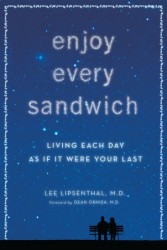
In Memoriam, Dr. Lee Lipsenthal

September 22nd, 2011 by Nick Jacobs 146 comments »

We have not even to risk the adventure alone; for the heroes of all time have gone before us. The labyrinth is thoroughly known. We have only to follow the thread of the hero path. And where we had thought to find an abomination, we shall find…God.
—Joseph Campbell

Such has been my experience with Dr. Lee Lipsenthal. Lee was the co-founder of Finding Balance in a Medical Life, a recognized leader, teacher and pioneer in the field of provider wellness. He was internationally known for his research work with my friend Dr. Dean Ornish in preventive cardiology. He was also well known in the field of Integrative Health, and past president of the American Board of Integrative Holistic Medicine.

Lee Lipsenthal, MD - Enjoy Every Sandwich - Nick Jacobs, FACHE - HealingHospitals.comAlthough Lee’s entrance into medicine was traditional, (a BS from George Washington University, his MD from Howard and an internship and residency at the Medical College of Pennsylvania), he started on his truth path of healing as a resident, where he developed the first multi-disciplinary cardiac rehabilitation program in Philadelphia, a plan that addressed stress reduction, exercise and nutrition teaching.

He then went on to become the Director of Cardiovascular Services for the Benjamin Franklin Clinic in Philadelphia, as well as a staff physician at The Pennsylvania Hospital. In this role, he developed treatment programs for patients with heart disease or risk of heart disease; he developed corporate wellness programs for national companies, and consulted on patients with cholesterol disorders at the hospital.

But who was the real Lee Lipsenthal? Lee was a hero who embraced the adventure and led the way for us all. In an incredibly selfless and positive way, like all heroes, Lee “lost himself and then gave himself to all of us.” He mastered the transformation of consciousness, and taught us all to look deeply inside ourselves. Lee’s life and teaching was always about the powers of life and their modulations through the action of man, and Lee’s actions led us all to a better place; a place of healing, love and understanding. He did this through his words, his music, his soul and his heart.

Lee Lipsenthal, MDLee captured the imaginations of many of us and gently drew us into his circle of positive influence where he provided a psychological center for our lives, he fed our individual and collective souls and he helped us to experience life at its fullest. He often took us to the edge of self-discovery, but he always took us to a place of peace and love. He could literally show us the “belly of the whale,” and then bring us back to a deeper understanding of our lives, our abilities and our spirits.

In many ways he helped us transcend our humanities so that we all could emerge into a deeper reality of serving our fellow man. He taught us that, as a person, if we don’t listen to the demands of our own spiritual and interior life, we will drift dangerously off-center.

Lee was our center. Lee was our friend, our mentor, our spiritual guide and our hero.

Lee passed this week, surrounded by his wonderful, loving family, and our hearts are breaking from the loss, but also reveling in the joy of having known him, having shared him and always loving him.

Learn more about Lee’s extraordinary journey, and his wonderful book, Enjoy Every Sandwich below.

You will be inspired and moved.

Share

On Cancer Research, Incentives and Cures

September 18th, 2011 by Nick Jacobs 40 comments »

From a blog entitled TTAG, The Truth About Genetics, comes a scathing indictment of the American Cancer Society. Truthfully, some of the contents are infuriating, but especially so, because as a co-founder of a research institute, I’ve lived them. First hand. When I saw that  the American Cancer Society’s two CEOs make a combined $1.6 million dollars in salary, I wasn’t shocked. Heck, the president of a 120 bed hospital who retired recently made almost that much. ACS is a big organization with lots of moving parts. It takes talented people to run big organizations, and they typically don’t work just for food.

From the TTAG  blog:

Today, ACS’s revenue is $1 billion, and the amount that goes to research is a measly 16%. Research is not the primary goal of ACS, and one of the great things they do is help patients undergoing chemotherapy by buying them plane tickets and paying for their costs. But, even when you consider other program costs like cancer treatment for patients, ACS has the lowest score for charities in terms of efficiency: 1-2 stars out of 4. (24.78%, according to CharityNavigator.org)

See also:

Once again, no surprise. The main issue that I had with the ACS was that their research funding, as meager as it is, goes to the “Good Ole Boys,” the group that is already part of the NIH/NCI club. Okay, you say, they have to have some standards. The Komen people don’t follow that same “Good Ole Boy” path, and thank goodness. They look for good science wherever they can find it.

So, what’s the real reason that I get upset? I sometimes think I’ve written too many posts about this already, but let me say it one more time: Unless and until we realign the system that currently is used to fund basic science in this country, we will never find true cures for cancer. There is very little to no incentive to cooperate, to work together, to encourage scientists to share and to reward them with grants for cooperating.  In fact, the entire system actively discourages it. It is a “Diva”-based system, that encourages silos of power around individuals.

Bottom line? We have a healthcare system that does not support wellness and prevention, but  instead financially rewards sickness and continuous testing and care for what may have been preventable ailments, and we have a research system that discourages cooperation and collaboration. We have a pharmaceutical industry that is interested in financial blockbusters…just like the movie industry.  We have a political system that caused our country’s credit rating to be downgraded and the price of money to escalate, and finally, we have an infastructure that is crumbling.

The good news, however, is that we still are the United States of America, and if we work together T-O-G-E-T-H-E-R  this can all be fixed.  It’s time for those of us who understand this to be heard.

Health 2.0 Leadership (1 of 2) from Nick Jacobs, FACHE on Vimeo.

Sandpaper sheets, green jello and patients who leave with infections they didn’t have when they were admitted. Hospitals DON’T have to be this way. Nick Jacobs FACHE reveals how, as CEO, he transformed a rural, critical care hospital from near bankruptcy to a consistently profitable, internationally-recognized model of patient-centered care and innovation. By creating a hospital environment that embodies healing in every aspect of its operations, Nick’s hospital also achieved one of the lowest acquired (nosocomial) infection rates in the U.S. for five years running.

Share

ACO’s or SSP’s: “Change or Die”

September 6th, 2011 by Nick Jacobs 78 comments »

Walk the Walk” author Alan Deutschman’s previous book kind of said it all in the title, “Change or Die.” In that book, Alan carefully lays out the statistical survivability matrix, and poses the question:

Alan Deutschman - Author of Change or Die and Walk the Walk - Nick Jacobs, HACHE - Healing Hospitals

Alan Deutschman

“What if you were given that choice? For real. What if it weren’t just the hyperbolic rhetoric that conflates corporate performance with life and death?…What if a well-informed, trusted authority figure said you had to make difficult and enduring changes in the way you think and act? If you didn’t, your time would end soon — a lot sooner than it had to. Could you change when change really mattered? When it mattered most? “

Then, he articulates the actual outcomes of studies. Talk about “tough love.”

“…The odds? You want the odds? Here are the odds that the experts are laying down, their scientifically studied odds: nine to one. That’s nine to one against you. How do you like those odds?”

So, as a nation, as healthcare leaders, as human beings in a country that is currently facing the realities of potential economic disintegration, we are faced with what can only be described as another enormous challenge: a financially unsustainable healthcare system. Regardless of your politics, regardless of your personal beliefs regarding the competency of the federal government and its ability or inability to fix anything, the law has been passed, the train is moving and it’s moving directly toward you and your hospital.

Over the past three years, we have repeatedly presented money-saving and money-making ideas to help begin to position your healthcare organization for the impending tsunami of change that has been launched. As a veteran of TQM, Six Sigma, Baldridge, and a half dozen other consultant-delivered “fixes,” I’m sure I can hear the words going round and round in your head, but, not unlike the clamor that arose from the HMO/PPO days of yesteryear, this ACO/SSP challenge has to be met and dealt with intelligently, and it has to be done in such a way as to not destroy your hospital or health system.

Let’s face it, we’re all pretty smart folks. We’ve all been in permanent white water for years, and the last thing that many of us want to take on is the ole captain of the ship without a rudder, during a hurricane while the lighthouses are being moved around on the shore.  But, once again, it’s here. It’s upon us, and we must deal with this challenge in an intelligent manner.

One possible alternative for smaller organizations is the SSP, a Shared Savings Program, the alternative put forth by CMS, the Center for Medicare and Medicaid Services, to a full-blown ACO, an Accountable Care Organization. Either way, however, SSP or ACO, the primary, overarching goal is to try to improve quality, decrease costs, and provide patient-centered care in a meaningful way. Not unlike the old HMO/PPO days, the effort requires infrastructure (and plenty of it…the average participant in the demonstrations spent about $1.7M on this one, single aspect of managing the healthcare new world order.)

What do you need? Well, you need 5,000 patients, to start. Then:

  1. Decide if you will use Medicare only or other patient groups.
  2. Determine the exact service area that you will target.  How many square miles?
  3. Decide which reimbursement model will work for your organization, i.e., an SSP that is more risk-based, or capitated.
  4. Figure out which provider groups will be involved.
  5. Examine IT reporting capabilities and process improvement methodologies.
  6. Identify patient-related strategies such as enhanced experience for the patients or faster throughput as well as reduction in errors.
  7. Then, dig deep into the organizational strategies for improvement.

Infographic: Medicare Margins - Nick Jacobs, FACHE - SunStone ConsultingLet’s face it. From 2001 until 2008, total Medicare inpatient margins for acute care hospitals have decreased every single year.  (Source: Journal of Healthcare Management)   Reimbursements have decreased while your bad debt has increased.  So, regardless of your tolerance for risk or change, cost control simply must become the culture of every healthcare organization in the United States. We have seen the variances in costs based on geography in this country and treble charges in one area as opposed to another will not go on into the future. Joel Allison, CEO of Baylor Health has stated that this movement is “All about…focusing on wellness, on prevention.” (Arnst, 2010)

We need our primary care docs, we need physician participation to a far greater degree than we currently have, and, at the same time, the physicians must be partners in the effort.  Employing physicians is also a critical element.

SunStone Management Resources can assist you in this effort on numerous levels, but the time to act is now!

Share

The Alpha and Omega of Healthcare in the United States

August 27th, 2011 by Nick Jacobs 15 comments »

While serving as a hospital administrator for over twenty years, I was aware of numerous people who had died in the emergency room because they had no insurance, had not yet qualified for Medicaid and were terrified that the cost of care would force them to live on the street.  Consequently, they waited too long to come in for treatment, and they died.

Rep. Paul Ryan (R-W) and Gov. Peter Shumlin (D-VT) - Nick Jacobs, FACHE - Healing HospitalsModern Healthcare’s August 22nd edition has listed the 100 Most Influential People in Healthcare in 2011. (Somehow they’ve missed me again.)  They’ve listed Republican  Congressman Paul Ryan of Wisconsin as the number one most influential person, and the Democratic Governor of Vermont, Peter Shumlin, as number two. Ryan is interested in a complete re-make of the Medicare and Medicaid programs, and Shumlin wants to move the citizens of the State of Vermont to a government-run, single-payer system.

Needless to say, these are very different views. It’s interesting that they both agree that employer-based insurance should be eliminated, so that neither portability nor employment is an issue. They differ in that Ryan believes that each individual citizen should receive a refundable tax credit for healthcare and that providers should compete based upon quality, price and outcomes. Shumlin, on the other hand, wants to do away with “fee for service healthcare,” but clearly understands the American’s public’s concern about government-run anything, and even says, “Government has gotten it wrong, every single time.”

According to Modern Healthcare, both want to fix the system that is bankrupting the nation. Ryan wants to “maintain a world class system built on innovation and excellence,” while Shumlin wants that single payer system to eliminate waste, administrative overhead and insurance company profits. It is Shumlin’s contention that enacting all of the Tea Party cuts and taxing the wealthy would still lead to the same federal budget challenges in the trillions of dollars that we face now.

Ryan wants to cut $750 billion in Medicare spending by making the allocation a block grant. People like Rose Ann DeMoro, executive director of the AFL-CIO- affiliated National Nurses United labor union say, “The market isn’t magic and it doesn’t trickle down…the Paul Ryans of the world don’t want a society.  They want individuals and corporations to make ungodly amounts of money.”

And so the debate continues. There is no magic elixir that will fix this without huge disagreements and turf battles.  As the Obama legislation began to unfold, the initial reaction from many within his own party was that his administration had “sold out” to Big Pharma and numerous other lobbies, and, as the Republican plan continued to be unveiled, the response was similar to DeMoro’s, because it was so heavily skewed toward big business and the free market, while providing only marginal assistance for the underserved of this nation.

UPMC vs. Highmark (Illustration by Ted Crow, Post-Gazette) - Nick Jacobs, FACHEIronically, as I look out my window and then drive a block from my apartment in Pittsburgh, I see another new “colony” of homeless people living under the bridge, and as I round the corner under Route 279N, there is a virtual apartment building under that road comprised of sheets and blankets hung to create separate partitions for the individual homeless people to live. At the next light leading to the North Side, a 30ish young mom begs on the corner for money for her kids, and two blocks past her is a homeless Veteran asking for money as well.



In the midst of all of this, the $9 billion UPMC battle with the nearly $4 billion Highmark juggernaut continues over an insurance company owning a hospital, and a hospital owning an insurance company.  Surely, in the richest country in the world, there are answers to these challenges that do not bankrupt the pharmaceutical or insurance companies, do not make our physicians second class citizens, and do not close two thousand small and medium sized hospitals while still providing care for everyone.

Share

Barcelona, VAT and Ambiance

August 18th, 2011 by Nick Jacobs 46 comments »

Last weekend, I traveled to Barcelona. How does one afford to spend a weekend in Barcelona in this economy with the dollar at $1.40 to one Euro, one might ask?  Points, my friends, points. When you travel enough, it’s possible to build up quite a few of these delightfully-useful but quickly-diminishing-in-value “perks,” and that’s how I got there.

Because it’s “Vacation time in Europe,” numerous hotels, restaurants, and tourist attractions offer nice packages for a reasonable number of points, and because I’d never been to Barcelona or anywhere in Spain for that matter, it seemed like a good plan. Albeit brief, my 4 day journey into yet another culture was almost worth the pain of traveling. Of course, if you remember my Serbia, Nigeria, Bosnia, Netherlands and Italy blog posts, you know that I’m all about “experiences.”

Barcelona - juice seller - Flickr Photo

Barcelona: juice seller at the Mercat de la Bouqueria - Flickr photo credit: Halvorson Photo

The longer I live, the more interested I am in how other people live. Many years ago, probably 20 or so, we had an exchange student, Monica, from Barcelona who used to stand in my family room, look out the window into the rolling fields and proclaim, “Nick, Nick, I am sooo bored.”  Truthfully, I was, too.

So, why Barcelona, VAT and the “A” word? I fell in love with the city. I loved the ambiance, the food, the wines, the architecture, and the people. Maybe it was the fact that there are two million souls living there, and I never felt uneasy even once. Unlike my last trip to Chicago, where I couldn’t sleep all night because of the continuing chorus of sirens from emergency vehicles, Barcelona’s street in front of our hotel erupted in the wail of those distinctive, European sirens only
about four times, from Friday until the following Monday.

Interior of La Sagrada Familia basilicaSome of the little things that captured my attention included the walk/don’t walk sign on the streets that actually allowed you enough time to cross at your leisure without being hit by an oncoming car. The people and cab drivers were polite and, most importantly, there was a feeling of helpfulness and respect in the shops, restaurants and architectural wonders.

Of course, by Sunday evening, we had visited nearly every architectural work of Antoni Gaudí, and toured and listened to a great concert at the inspiring Palau Música Catalana. Barcelona is today one of the world’s leading tourist, economic and cultural and sports centres, and this all contributes to its status as one of the world’s leading cities.

But what about the rest of the title of this blog post? Every time we purchased something material there, the VAT tax was applied, and when I asked someone to explain it, the answer was simple, “It’s how we pay for healthcare.” Consequently, when we walked the streets over that entire weekend, we saw a total of five beggars, and three of them had a Starbucks Cup to catch the falling Euros.

The other things that we saw everywhere were dumpster-style recycling binsBarcelona: color-coded recyclying bins. And not just any bins, either. Very fancy, clean, able-to-be-picked-up-mechanically bins, that were specifically color coded for every imaginable kind of recyclables. Not rocket science, but a comment on community pride, sustainability or climate change, perhaps.

So, we’ve taken care of the creation of a pleasant ambiance on numerous levels with extraordinary architecture, beautiful tree-lined streets, recycling, healthcare, low crime and compassion for fellow human beings. We didn’t see many Mercedes, but we also didn’t see much evidence of poverty, either. The beaches in town were public, and not controlled by exclusive beachfront hotels. Barcelona’s public transportation was a pleasure — clean, comfortable and efficient, with a train to Paris that delivers you there in about three hours…and the Tapas, wine and customer service were all simply amazing.

Nationally, Spain’s unemployment rate hit 21.3%, and they are listed as one of the PIIGS:  Portugal, Ireland, Italy, Greece and Spain…i.e., economically-unsound EU countries. In spite of these huge challenges,  Barcelona was a great city, a great experience, and a great setting with world class arts. So, should we charter an Airbus 380, load up our U.S. Congress, and fly them to Barcelona?

Nah, it wouldn’t help.

Hmm. Maybe we should fly them to Somalia?

Share

E-Patient Dave: Let Patients Help!

August 7th, 2011 by Nick Jacobs 35 comments »

After a life-changing experience, Boston area businessman Dave deBronkart has re-named himself E-patient Dave.  My introduction to Dave took place on January 26th, 2010.  We were both invited to make presentations in Washington D.C. at the Health 2.0 STAT event. This was my first rapid-fire Ignite or Pecha Kucha-style presentation, and, frankly, I was at first a little overwhelmed by the brevity. Having been a teacher for the first decade of my career, the experience was similar to following the Assembly Day bell schedule in any school. We had strictly limited time to “tell our story,” and as the first hospital CEO in the country to have had my own blog (beginning in 2005), it was a story that I had told before in cities like Chicago, Las Vegas, Washington D.C., Charleston. What I hadn’t expected to hear that evening was my fellow presenter Dave’s powerful and inspiring story.

Interestingly enough, after retiring from my hospital CEO position in 2008, my passion had been redirected toward the one thing that touched me the most during my 22 years of hospital administration, patient advocacy. It was simple to me. The United States of my youth was changing, but healthcare, not unlike many other professions, has always been filled with terms, attitudes and activities that are mysterious, confusing, sometimes inhuman and usually concealed from the very patients who are receiving the services and benefits. Consequently, it was my desire to reach out to every person to let them in on the “inside track” to healthcare, to share with them the insights gained by my two-plus decades in the business, and to help them get the excellence they truly deserve regarding treatment, respect and care. The result was my first book, Taking the Hell out of Healthcare.

Dave, on the other hand, told the story of his own very personal journey through his near-death experiences as a patient at one of the Harvard Hospitals. His very moving and special story was one that not only touched everyone’s heart; it also demonstrated the very deep and real need for transparency, communication and access to our own health records.  Interestingly, the happy ending to Dave’s story was a twist on what had been a very moving and very different ending for one of my closest personal friends about two decades earlier. So, the good news for Dave was that they had refined, improved and eventually perfected that treatment that saved his life.

The most important aspect of his story, however, was that his physician encouraged him to seek input via the Internet from other people who had lived through similar experiences. It’s where Dave found the recommendation that later proved to be the secret to his survival.

Because of his compelling story, his amazing recovery and the beauty of having lived to participate in his daughter’s wedding, there was not a dry eye in the house. As a patient advocate, I freely admit that included my own eyes. Dave is exactly what this country needs right now. He is a man who is utilizing all of the tools available to all of us via Internet connectivity, and he is pushing hard for positive change that is sorely needed in our field.  So, you go, E-patient Dave… don’t stop now.  In fact, don’t ever stop.

e-Patient Dave de Bronkart, Nick Jacobs, FACHE, Health 2.0 DC STAT meetup #health2stat

Share

The Smurfs and Culture

July 29th, 2011 by Nick Jacobs 176 comments »

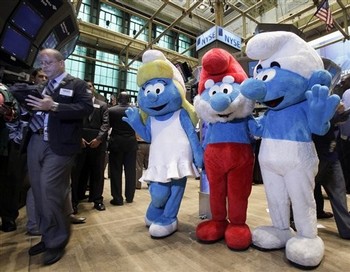
The other day, I was imagining a conversation between our U.S. elected officials about the Smurfs.  On one side of the aisle, the rhetoric would go something like this: “I believe that Poppa Smurf  represents Karl Marx. He is not the leader of the Smurfs but an equal who is admired by the others for his age and wisdom.”  Then they might say, “And Brainy Smurf represents Trotsky, as he is the only one who comes close to matching Papa’s intellect.  He wears round glasses, is often isolated, ridiculed for being too professorial and is even ejected from the village for his ideas.”

Photo Credit: AP/Richard Drew

Furthermore they might add, “The smurfs don’t have private property, have adopted a collective-style economy and no individual Smurf is represented as either superior or inferior to others.” Someone would yell out, “They probably even have healthcare for everyone!” Consequently, the conclusion from one side of the aisle would be that the Smurfs are Socialists and are destroying the fabric of our society.

Then the other side might say something like: “Gargamel represents capitalism and embodies all the negative attributes associated with that economic system, such as greed, ruthlessness and the pursuit of personal gratification.”  “Gargamel is the quintessential symbol of Wall Street and will take his billions in tax cuts but never create even one job,” this side would say. At the same time, they might surmise that, “Azrael represents the worker in the ruthless, free-market state that is Gargamel’s house, and his union must be busted!”  Their final conclusion would be that, “The wealthy are taking all of our money and destroying the middle class.”

Is it any wonder we can’t get a debt ceiling bill?

One of my last professional trumpet playing jobs, “Smurfs on Ice,” was nearly 25 years ago. So, Brainy, Jokey, Grouchy, Greedy, and Stinky were all part of my early years, and now they are coming back, but the world is not the same!  So, be careful Smurfettes. Don’t invest in the market, real estate or dot.coms.  Try to avoid those outrageous credit card interest rates.  Don’t, whatever you do, don’t believe what the heads of the big banks and insurance companies are saying, and, for goodness sakes, buy gold, or maybe buy precious blue stuff.

When I was a kid, I was on journey to learn. So, when my dad bought me a box of vocabulary words and helped me learn ten new words every night, it wasn’t because he wanted us to grow up and be rich.  To him, the most important thing that he could do for his children was to make sure that they got an education.  He was all about the awareness that comes from exposure to information.

It started for me as a simple challenge to read the Bobbsey Twins books, and then the Hardy Boys, and from there, works by Mark Twain, Shakespeare, Dickens, Poe, Roth, Hemmingway and Tolstoy. Going through life without all of these friends would have been an empty and lonely journey. I’ll never forget when my brother, a young teacher at the time, introduced me to his classical record collection.  Yes, I was a trumpet player, but when I discovered Mahler, Beethoven, Mozart, Bach, Wagner, Brahms, Handel, Stravinsky, Chopin, Mendelssohn, Berlioz, Bartok and Sibelius, my life was changed forever.  Between the written word and the music, the mysteries, joys, challenges and humanness that is life became more apparent to me every day.

We have migrated away from anything but basic education and our favorite pastimes are video games, celebrity magazines and reality TV shows. Maybe that’s why we seem to have lost our way in this country.  We no longer embrace a culture of open mindedness, understanding and compromise.  Is it any wonder our U.S. Representatives can’t work together?  Maybe they are simply unenlightened…Maybe they all need to spend some time with the Smurfs and read a few blue books.

Share

The Budget Impasse and Death

July 16th, 2011 by Nick Jacobs 8 comments »

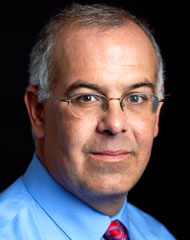
David Brooks wrote a very interesting column last week in the New York Times entitled  Death and Budgets,” in which he explains the current Washington D.C. budget impasse and compares it to our collective inability to come to grips with our own mortality.

David Brooks - The New York Times - Nick Jacobs, F. Nicholas Jacobs, FACHE - healthcare - healing hospitals - SunStone Consulting

David Brooks | Josh Haner/New York Times

His treatise quotes S. Jay Olshansky, one of the leading experts on aging, who argues that life expectancy is now leveling off, and others who say that, we are marginally extending the lives of the very sick. Brooks goes on to articulate that, “A large share of our health care spending is devoted to ill patients in the last phases of life.”  Then enumerates upon the fact that, as a country, we will be spending $1 trillion dollars annually, double Medicare costs right now, on Alzheimer’s disease alone by 2050.

His closing thoughts revolve around the fact that “unless we confront death and our obligations to the living like his friend who was recently diagnosed with ALS, we will not be able to reduce health care inflation and balance our budgets. “ He then concludes that “we think the budget mess is a squabble between partisans in Washington. But in large measure it’s about our inability to face death and our willingness as a nation to spend whatever it takes to push it just slightly over the horizon.”

Since 2005 I have written  many times about this issue. In fact, one of my most quoted experts on this topic is a previous Pittsburgh resident, former Colorado Governor Richard Lamm, who spoke openly about the immorality of “inter-generational resource theft,” where the voting senior citizens have pulled the majority of the healthcare resources away from the children of our nation. According to Lamm, this generational robbery has contributed to produce one of the highest infant mortality rates in the civilized world  and has provided the resources allowing our seniors to squeak out another few months or days of life.

I also remember one of my Carnegie Mellon professors, Ian Rawson, PhD, describing the resource challenges presented in certain extremely conservative states where they have refused to fund organ transplants for children.  Obviously, those who voted most often and most passionately were the seniors themselves who could then use those resources for mechanical life support or surgeries on the frail elderly that neither extend nor improve the quality of their lives.

As a former hospital CEO, it seemed clear that the medical schools had taught the Northern European philosophy that “Death at any time is failure.”  It seemed that the very reality of our mortality was overlooked.  Having had responsibility for funding a palliative care unit in my last hospital, it struck me as sad that the vast majority of patients being admitted there arrived for the last week, day or few hours of life, and the “life extending measures that had be foisted upon the patient and their families” prior to that time neither reversed the disease nor improved the quality of their lives.  Unfortunately, some of this is about income for the provider, but most of it is about our inability to face the end of our time here on earth.

It was always disconcerting to see a priest or minister as a patient in critical care screaming out in fear of their own death.  It would seem that they, of all people, could find peace in the upcoming transition. So, what about the rest of us?

In closing, and this too is my “one note samba,” until or unless we begin to reimburse for wellness care, embrace death as part of life, and stop rewarding our scientists for “not sharing their ideas” with each other, we will continue to act pretty much like my daughter’s dog, Chipper. Tail-Chasing-R-Us, and Washington DC is currently engaged in chasing a tail that could easily wipe all of the china off the dining room table.

All we seem to see are blades of grass in our fields of dreams.

Share

Geographic Variances in Medicaid Spending – And the Winner Is?

July 7th, 2011 by Nick Jacobs 101 comments »

Health Affairs cover - Nick Jacobs, FACHE - Medicare - MedicaidWhen Health Affairs released a first-ever study of geographic variances in Medicaid spending on July 7th, it was a new twist on transparency that is just the beginning of what will become a detail-by-detail exposé of care and treatment of patients in the United States.  Just imagine a few years from now, when every record is electronic and every detail will be instantly available to the government.  Like this variance report, we will begin to see the good, the bad and the ugly of how medicine is practiced in this country.  So… how do you spell transparency?

A few weeks ago, the New York Times ran an article in which the “overuse of Medicare-funded CT scans” was explored. Featured in the digital version of this article was an interactive map showing virtually every hospital in the United States, and as the mouse was passed over each hospital, the percentage of inappropriate CT scans appeared above the facility’s name. If yours was one of the hospitals that was 80+ percent over using this device in multiple single-day scans, you were, as they say, “busted.”

Well, this release exposed at least one entire section of the country that is overusing Medicaid on numerous levels.  Although the study revealed a wide variance in per-beneficiary spending, one geographic region outshined them all.  The findings showed that after adjusting for the case-mix of patients, variations are driven mostly by volume of services provided and, to a lesser degree, by price.  Per-beneficiary spending in the ten highest states was $1,650 above the national average, mostly caused by the greater number of services provided.

Image credit: New York Times

One of the most significant findings revealed by this study was that the supply of primary care physicians in specific areas was associated with reduced rates of admissions for diabetes, lung disease, and adult asthma.  The authors suggest that this finding might point to the fact that increased access to primary care providers may result in improved management of common chronic diseases for people on Medicaid.

So, by now you’re asking, “Who won?  Who used more money per capita to treat Medicaid patients?”  It was The Mid-Atlantic States : New Jersey, New York and Pennsylvania used more Medicaid funds per capita than any of the regions in the United States. For example, the per beneficiary cost in New York was twice that of California; $21,195 for New York vs. $11,200 for California.

As a region, New England used the least amount of Medicaid resources and as a state, Washington provided the best example of “how things should be.”  How did they do it?  They increased access to primary care and reduced hospital care.

Todd P. Gilmer, Ph.D.

Todd P. Gilmer, Ph.D. - UCSD

Finally, places that had higher numbers of hospital beds and specialists were associated with higher numbers of hospital admissions while higher numbers of primary care physicians were associated with reduced rates of hospital admissions… Todd P. Gilmer, PhD, professor of health economics in the Department of Family and Preventive Medicine at the University of California – San Diego said, “By looking at service mix, access and price, states can find ways to make their programs work better.”

Share

People and Ponies

June 26th, 2011 by Nick Jacobs 33 comments »

I’ve been periodically volunteering my weekend time to help establish an equestrian healing center where the horses help to heal the people. Although I’m not particularly connected to horses, I appreciate them and like to watch them run freely through the fields. It’s the people in this particular volunteer leadership group, however, who “make me tick.”

Over the last twenty or more years, I’ve had several opportunities to meet healers. Now, don’t get all “New Age-y” here and run out of the room screaming. These people are “pure of spirit,” and have no ulterior motives, except to help other people navigate through this sometimes relentlessly unforgiving maze that we call life. There are two doctors, an RN, two equestrian specialists and a couple of administrative types like me who simply believe that mankind is somewhat intellectually challenged, and not always capable of grasping anything that is not black and white or concrete and factual.

Surely, with all of the things that we purport to believe in religiously, it seems incomprehensible to me that we, as a group, have problems giving it up to the fact that our brains, our spirits and our hearts don’t or can’t play a larger role than that assigned to us by our Primary Care Physicians or our big Pharma companies. For the most part, we believe in an after-life, we believe in miracles, we believe in goodness, but we have problems understanding how an Autistic kid on a loving, nurturing horse can be helped. It’s because there have not been enough control groups, double blind studies or scientific documentations to support the theory, and typically those scientific theories are only scientific law until they are proven wrong, and that has happened plenty of times.

The freedom of having been a nonmedical, nonclinical, nonscientific healthcare CEO was that “I really didn’t care what made people get better; just so they got better.” Consequently, if a golden retriever licking your hand or a clown bopping you with a sponge hammer, a violinist, a massage therapist, an acupuncturist, a flower essence or aroma therapy specialist, a reiki master or a visit from your grandchild helped you, it was all good to me. Pick your passion and start to heal.

The only real way to describe this philosophy was “Open” because that’s what it was and is. One of the amazing aspects of the collection of healers that have gathered to lay the groundwork to make this amazing dream operational is that they also believe that there is much more to healing than a pill or seven pills, and they are more than willing to be open to the spirit of healing.

Of course, one of the problems with this type of work is that you have to “let go” to allow things to happen, and if you are too into the discipline of concrete and only proven science, you will not let enough of your guard down to see what can happen. The problem is that we’ve all heard about the quacks who almost religiously rip off naïve people with magic elixirs or spiritual interventions like Whoopi Goldberg called forth in the beginning of the movie “Ghosts,” but our collection of healers is filled with people who are sincere, well-trained, highly-credentialed and, believe it or not, open to understanding what may otherwise be ignored by the scientists or the traditional establishment.

So, on we roll in search of others who believe that there may be ways to help people that have not been used for several decades or centuries where the brain leads itself into healing or where the switch that turned the gene on inappropriately can be coerced into reversing that physically destructive non-decision. Life is a journey, and when I look back at all of the people who were helped because of things that sometimes make no sense to anyone else, my only response is “Yeah, that’s right.” It can happen, and with the help of other believers it will happen.

Share