Posts Tagged ‘Nick Jacobs’

The Marketing Enigma

February 15th, 2009

As the economy continues to present its myriad of challenges nationwide, hospital executives are embracing a variety of cost-cutting measures at a very high rate of implementation. Delays or discontinuation of capital projects, employee layoffs, and a variety of other broad-based measures are currently dominating the healthcare environment.

Departments without direct patient contact are usually perceived to be the easier layers to peel in these expense reduction activities. Areas such as marketing, community, and public relations often become prime targets as they are significantly scaled back or even disbanded.

Historically, hospitals have implemented fluctuating sequences from one extreme to another as they have decreased and increased marketing department sizes and budgets through the various economic cycles. Unmistakably, in challenging economic times, marketing is nearly always more important than ever. Without knowledge concerning the various services available, the patients will not be aware of the nuances of each and how they could impact their health and wellness.

Having said this, however, many hospital executives are not experts in this area, and consequently, they simply move in lockstep with those individuals who see these programs as non-patient expense centers that merely drain the organization of its valuable resources even further.

BusinessDictionary.com aptly describes marketing as the management process through which goods and services move from concept to customer. As a philosophy, it is based on thinking about the business in terms of the customer, or in healthcare, patient needs and their satisfaction. As a practice, it consists of the coordination of four elements:

  • identification, selection, and development of a product
  • determination of its cost
  • selection of a distribution channel to reach the patient, and…
  • development and implementation of a promotional strategy designed to reach these goals

In order to avoid erroneous decisions that could lead to disastrous business consequences for the organization, marketing evaluations might be performed by professional marketing assessment companies specializing in this arena. Some of these firms can provide this service in economically viable risk-reward agreements that do not further complicate the financial challenges being addressed. They specialize in the evaluation of services that detail which marketing functions need to be continued and which functions should be restructured, and/or outsourced. The goal of these marketing evaluation firms is to:

  • help preserve the existing positive effects created by marketing
  • build better marketing practices, and…
  • cut the unnecessary associated costs

In two decades of observing the yo-yo phenomena described above, we have worked with numerous individuals and firms along the way, but none have been more valuable than the firms that specialize specifically in this area of marketing department analysis.

Firms that provide this specific service can be found through the American Association of Healthcare Consultants, The American Marketing Association, and the Society for Professional Marketing Services.
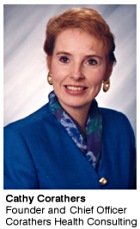
In our work, however, we have found at least one company that has continuously provided the necessary analytic and evaluation components required to complete this sensitive task. Corathers Health Consulting is a unique organization because it utilizes luminaries and unique specialty consultants through a team approach for most of their highly customized projects. What we observed when we worked with Corathers was that their distinguished consultation supplied an unparalleled differentiating factor over the other consulting companies with whom we had previously worked, but they are one of many such firms.

Regardless of the organization chosen, the concept is the key, and that is that you owe it to yourself and to your organization to understand exactly what can or should be eliminated or outsourced before the cuts are irreversibly implemented. The future of your organization may lie directly under that hatchet, and once the decision has been made, reverse is a costly gear to find on a very bumpy road of lost business, missing publicity, and absent advertising. The answer lies in cutting wisely and appropriately as you attempt to keep patients informed and to grow your business.

Linking a patient-Centered Approach to Quality Improvement & HCAPS

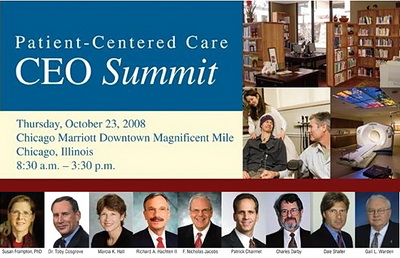
Nick Jacobs, FACHE addresses the 2008 Healthcare CEO Summit, co-sponsored by the Picker Institute and Planetree. Chicago, IL USA – Fall, 2008

Share

Like Deep Sea Fishing

February 2nd, 2009

Being a little older or just more chronologically mature makes this new life of consulting somewhat like snorkeling or even deep sea fishing for me. It’s a whole new world out there. If the total culmination of all of my experiences were listed on an 8½” x11″ sheet of paper in order of interest, category, and complexity, it would have to be written in 4 pt. type.

When it comes to prioritizing, cataloging, and quantifying my consulting practice desires, skills, knowledge base or just interests, this gets somewhat crazy at times.

For example: Planetree and the Samueli Institute have both captured my imagination and, I’m sure that over the years, I’ve captured theirs as well. Optimal Healing and Patient Centered Environments are my forte, my passion, and my love.

Do you know all about Web 2.0 …or 3.0, as some are calling it now? I’ve presented all over the United States and been featured on podcasts and webinars for years. How should you use Twitter, YouTube, and other streaming video platforms, Facebook, Blogs, Podcasts, Webinars, and other new technologies to move your business forward, to publicize your specialities, and to get your company’s name out there?

The actual science of microbiology is NOT necessarily one of my passions or deep skill sets, but running a research institute for nearly a dozen years that specialized in proteomics, genomics, biomedical informatics, and histopathology while interacting with the Department of Defense and Military medicine community certainly is a skill base developed through massive amounts of tears, sweat, and blood (my own). This information alone should be something that someone needs to know about on a regular basis.

The world of small and rural hospitals you say? My goodness, name someone who has had more “edgerunning” experience in this area than I have, and I’ll personally send them flowers. The growth, nurturing, care and feeding of a hospital that is smaller than 100 beds takes special stamina and a very positive mental outlook, because limited resources require unlimited creativity.

Economic Development through technology, healthcare, small businesses, and even tourism seems to have been a recurring theme in my world for decades. Jobs, Jobs, Jobs.

How about OC-48 dark fiber, telemedicine, teleradiology, telepharmacy, telecritical care, and teledermatology? Been there, done most of that, and have been working with groups and contacts who can add electronic medical records, disaster recovery/business continuity, data fusion centers, and other areas of specialty to your needs.

Interested in being an all-GE shop? Going completely digital? Having a 3T MRI with a breast coil? How about mobile PET/CT or the latest in mammography, and data repository technology? Okay, I’m not an expert, but I sure do have some interesting knowledge and amazing contacts here, and when it comes to breast care centers, we constructed one of the finest in the world.

Green? Wanna be green? Well, unlike Kermit’s song, it can be easy being green, and one of my current assignments involves everything green for schools, churches, and, most importantly, hospitals. How to get there, how to save, and most importantly, how to MAKE money from going green is currently something that we understand.

The Dean Ornish Coronary Artery Disease Reversal Program that we established is one of the best in the country, and we know how to set them up, run them, and help them prosper.

What about the World Health Organization? Work in the Netherlands, Croatia, Bosnia, Serbia, Montenegro, England, Italy, Greece, and even Africa interests me deeply, and my contact lists from those areas are very long indeed.

Construction? How to afford it? Alternatives to traditional methodologies, traditional financing, and Planetree design? Yep, we have that knowledge base, too.

Of course, there are things that you probably haven’t even considered: Wellness or EQ education, Patient Centered Care models, employee centered care to get you to patient centered care, the use of Markeking to grow your organization and to protect your position, and don’t forget: board relations, strategic planning, employee education, and, of course, nutrition.

Now, add to that this list of skills that SunStone brings to our table as well: the CDM, charge process, Compliance, Documentation Accuracy, Inpatient Coding and Compliance, Outpatient Charge Process Analysis, Outpatient Billing Maintenance, Pharmacy Revenue Cycle, Pricing, Recovery Audit Contractor Readiness, Reimbursement and Financial Analysis, Revenue Cycle, Transfer DRG’s and Workers’ Compensation Recovery.

IF YOU NEED US… Remember:

F. Nicholas Jacobs, FACHE
International Director
SunStone Consulting, LLC
1411 Grandview Avenue,
Suite. 803
Pittsburgh, PA 15211
nickjacobs@sunstoneconsulting.com

Home Office: 412-381-3136
Mobile: 412-992-6197
Fax: 866-381-0219

Share

Make Sure That You are on the Right Side of the Paradigm Shift

January 15th, 2009

The word paradigm provides a cerebral representation of a model that, throughout our lives has remained relatively constant. Transformational changes in the manner in which we travel, how we communicate, and even in the ways that we are educated have simultaneously produced significant shifts in those models as well. In the early 90’s, we were informed that the information being transferred to us would only be viable and, in fact, would be very nearly invalid within about 18 months or so after ingestion.

Those parameters of informational decay continue to diminish exponentially as we immerse ourselves in 24-hour instant access to changing data, innovative discoveries, and altering states of acceptance of ideologies that were once believed to be infinite in their substance. Science is only valid until the next discovery.

The archetypical model of high-tech health care that was believed to be our “Star Trek” salvation from the ills of our parents, and their parents is currently being exposed as an artificial promise that has failed to deliver healing. Each decade our technologists have produced new; more sophisticated, and higher priced equipment with promises of earlier detection. Unfortunately cures have not been part of the equation. The additional technology has simply produced additional questions.

As we delve into the diva world of science, we find many reasons why significant progress has not been made, mostly related to a lack of continuity in the incentive systems. But, because of these failures to heal, we also may now be able to discern another reality that will truly contribute to the new world order of medicine.

Dr. Lee Hood, M.D., Ph.D

Lee Hood, M.D., Ph.D

Dr. Lee Hood, infamous for his work in the creation of the equipment used by our present day scientists, launched a school of thought that has been generally accepted in the scientific community, Systems Biology. Dr. Wayne Jonas has pursued with passion his work in Systems Wellness. Both of these edge-running thinkers are also working to contribute to a medical degree at a leading university that will be entitled Systems Medicine.

The uniqueness of this type of thinking is not the newness of it. It is, in fact, a melding of the old and the new, the oldest and the newest approaches to healing. What Drs. Hood and Jonas separately yet collectively are advocating is an approach to illness that embraces the complexities of genomics and proteomics and allows that knowledge to be firmly wrapped in a swaddling of information that, in many cases, has been with us since indigenous man walked the earth, an Optimal Healing Environment.

Wayne B. Jonas, M.D.

Wayne B. Jonas, M.D.

We have all been inundated by the mythical promise of cures from fraudulent presenters, and the result of those untested, unproven, and unfounded promises has created a culture of distrust, cynicism, and fear that thwarts the reemergence of those healing practices that represented not only viable alternatives, but, in many cases, the only alternatives that were available to our societies less than eighty years ago. As we more clearly understand that the human body is a comprehensive system that interacts within itself on a myriad of levels, we also can begin to understand why individual responses to certain types of healing modalities also produce very different results, i.e., Systems Healing.

The philosophies, beliefs, and practices of the American Board of Integrative Holistic Medicine, a major group of practitioners who have come together to provide not only education, training, and additional resources to physicians in general, have also come together to ensure that those Systems Healing practices that were pushed aside for the promise of high tech and high chemistry are reintroduced to medicine and healing in an appropriate and informed manners. Their work is not new to mankind, to medicine, or to healing, but it is a reemergence of those long proven, highly embraced modalities that promote and support health and wellness, the new paradigm?

Share

Two Guys Medical Center

January 9th, 2009

Back in the early nineties, two of my peers replicated the pro forma and business plan of an offer made by a for profit hospital system that was interested in buying a specific medical center. They then presented it to a religious order and ended up buying a hospital which many of us began to refer to as “Two Guys Medical Center.” The difference was that, unlike the religious order, they were interested in it for some personal financial gain, the American way. Once the cash flow turned into a trickle, they found their way clear of ownership with heavy golden parachutes from the organization that bought the hospital, and it became the gift that kept on giving. All in all I’m sure that it was a very lucrative series of events that, after their or my death would make for a great fiction novel.

As I prepared for my departure from my previous employer, the entire issue of identifying someone to continue to carry the torch of leadership weighed heavily on my mind. Succession planning, if you will, was never far from my thoughts. With that in mind, I looked into the region and found, well, two guys. These two guys were very different from the previous two mentioned. They were committed to the good of mankind on so many levels that no one could question their personal intentions. Over a year later, the reality of their futures does not lie firmly in my hands when succession is discussed, but they certainly are two people to watch as the region’s health systems continue to morph medically.

Only four short years ago, Tom Kurtz, one of my two recruits, was working diligently every day in every way to ensure that four heart stents was an inadequate number for my chest. It had been his job at the competitor to literally master my strategic plan and to replicate it at an even higher level. He found federal, state, and local funds to begin a neuro-science center, research in post polio syndrome, work in anesthesia that would be converted to the battlefield, and, in his spare time to build and promote a Tech Park for the City of Johnstown.

We were usually friendly, but fierce competitors. He honestly has never told me the entire story of his journey with his former employer’s leadership, but I’m sure it would fill about ten of these blog posts. Tom was a master at political nuance and learned quite a bit about grants from the Department of Defense. He not only knew where to find them, he learned how to get the monies delivered to the projects for which he was responsible. Tom is progressive, aggressive, and knowledgeable about both the need to find sustainability on the research side and growth on the hospital side. When it comes to the “vision thing,” Tom embraced that as well. He’s not one of those cant-see-the-forest-for-the-trees guys. In fact, he is just the opposite of that. He sees the big picture and quickly embraces just exactly how things can be in the future with a little guts and a lot of persistence.

Dr. Matt Masiello

Then came Matt. Dr. Matt Masiello has been a friend for over a decade. He represents almost everything that I embrace philosophically. Matt is a gentle and kind man who fully comprehends the value of treating human beings like human beings. A background as a pediatrician has enabled him to understand compassion, and after having been in charge of intensive care for years, he has also learned of the heartbreak that this profession can bring. Dr. Matt captured my attention a year or so ago when, like me, he got involved with the World Health Organization. This time, however, he went way beyond my wildest dreams and has literally been appointed the U.S. representative for the WHO.

When my short history on this planet is finally written, let it be said that Matt and Tom have had a tremendous impact on our community, our region, and now our world as special attention is given to breast cancer research, and as health and wellness, prevention and anti-bullying programs are nurtured, cultivated, and grown by these two men. No, it’s not “Two Guys Medical Center,” but it sure is a medical center that has been positively impacted by two guys. Keep up the good work, Matt and Tom. This region needs you.

Share

More on Leadership…

December 12th, 2008

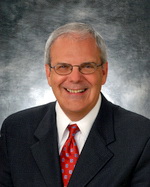
Nick Jacobs, FACHE author of Taking the Hell Out of Healthcare

One imperative for any leader is a positive mental attitude. We must work tirelessly on believing in ourselves, and then we must work constantly to reinforce that belief with positive self-talk. If we embrace that concept that we can, there’s a very good chance that we indeed can. If, on the other hand, we believe that we won’t, we probably won’t. This single belief can initiate all forward movement. Winners in life constantly encourage themselves to think that I can, I will, and I am, and they don’t focus on the past —the should have, would have, or can’t do’s are gone forever. We can never make a better past for ourselves.

Last year, one of our employees attended a non-traditional educational seminar whose primary focus was directed toward the analysis of different personality types. When the employee returned, I asked, “What did you learn?” Their response was, “I learned that the primary function of people with my personality type is to pee on your cornflakes, to rain on your parade, and to frustrate your every creative idea, because that’s just what we do.”

Hence the opening paragraph of this piece. We are in difficult economic times, and the general counsel from our advisors is more often going to be to take no risks. If they are doing their jobs, we will be inundated with reasons why we should be against almost everything. In fact, words like growth, expansion, and opportunity all seem to be put away as this storm cellar mentality prevails. They will argue that they are saving their organizations by “shrinking to greatness” while opportunity after opportunity slips away.

One of my favorite visuals of this mind set comes from the 1990 movie Ghost where the people were helped to find their place in eternity by little demons that came out of the sewer grates to drag their souls into Hell. As leaders, we are surrounded every day by people who see their job as one of hard, cold, black and white facts. There are the extremists who spend their days spreading pessimism, fear, gloom, and negative energy; looking at the down side as they constantly undermine not only growth, but the attitudes that foster growth. The blacker the sky, the deeper the reinforcement of their concerns, and the more intense the corporate paralysis becomes throughout the organization.

Positive Mental Attitude Psychologist, Denis Waitley helped to change my life when he lectured on this topic nearly 30 years ago. He had been the U.S. Olympic athletes’ psychologist. Dr. Waitley taught us to learn from the past, set vivid, detailed goals for the future, and live in the only moment of time over which you have any control: now. He always spoke about the reality that life is inherently risky and that there is only one big risk you should avoid at all costs, and that is the risk of doing nothing.

Don’t get me wrong, conservative thinkers are important in the balancing act of leadership, but they must never be given the power to control all aspects of an organization. It is a recipe for disaster. The result will be stagnancy and eventually, business failure. There must be a means to carefully look at what they have to say, to evaluate the risks outlined, and then to make a decision based upon the prudent person process, but, having said that, remember that leadership is not a gutless proposition.

If you are not interested in some sleepless nights, tension filled meetings, or numerous failures, don’t get into the game. As Waitley says, the winner’s edge is not in a gifted birth, a high IQ, or in talent. The winner’s edge is all in the attitude, not aptitude. Attitude is the criterion for success. There are two primary choices in life: to accept conditions as they exist, or accept the responsibility for changing them.

A leader’s world is not always black and white.

Share

Something’s Gotta Give, Something’s Gotta Give, Something’s Gotta Give!

November 1st, 2008

My Facebook friend, Anne Zieger, editor of Fierce Health Finance, wrote a compelling piece the other day regarding the potential demise of hundreds of hospitals. Her prediction is based upon some very valid financial realities, and we are witnessing them locally as well as nationally. Not unlike the little banks in our area that seemed to have been insulated from Wall Street’s collapse, some of these national problems seem to be washing over some of the smaller hospitals with relatively minimal damage. Yes, many of us have seen as much as a 10% decrease in elective, outpatient procedures.

In fact, while visiting a really upscale mall for a photo session with my two year old granddaughter, Lucy, an employee engaged me in a conversation about the rotten economy. About five minutes into the conversation, she indicated that there are currently 150 stores in the chain for which she works, and that only five percent of them made budget last month. Portrait pictures must fall into the category of a luxury as their business is severely impacted by this economy. More directly, however, she indicated that she needed stitches removed the other day, and that, “she did it herself” rather than spend the $20 co-pay.

So, are we seeing decreases in important tests? Are we seeing patients avoiding emergency room visits? Are we seeing patients cutting their prescriptions in half? Yes, to all of these questions. Anne, however, seemed to be talking about the “big boys,” where their millions or billions in investments have recently tanked. If you are so big that your income from running the hospital is not a major source of protection, and your income from your investments is propping you up, then the problems begin to manifest themselves exponentially.

“Some hospitals are responding by digging into their investment income more deeply than usual, using it to finance capital projects, or even meet operational needs. Others are issuing bonds with the scary codicil that they’ll buy them back if finicky investors want to dump them,” states Zieger in her column.

She further goes on to explain that “both of these situations put a huge squeeze on hospitals’ long-term viability. One robs from their long-term assets to solve medium-term problems, while the other puts the hospitals at risk of being bled dry by investors who get spooked.”

Well, wouldn’t ya know? Yes, we are seeing a few challenges due to decreased electives, but not because we were living off of our investments. The other good news is that, because we froze our fixed pensions several years ago, we are seeing very little impact upon them from the huge drop in those investments as well. Unlike many of our larger peers, neither of these issues is similar. Between the drops in the market, the loss of pension funds, the decrease in electives, and the down-grading of their viability by the bond markets, their challenges look galactic in size compared to ours.

Sometimes smaller is just safer.

Share

A Note From Nick Jacobs

October 24th, 2008

A Note from Nick Jacobs

On October 23, it was my honor and privilege to speak at the PATIENT-CENTERED CARE CEO CONFERENCE in Chicago with some very impressive CEO’s and Leaders. My topic was “Linking a Patient-Centered Approach to Quality Improvement and HCAHPS,” but my deeper theme was “Leadership with a Heart – Developing Love and Respect in the Workplace by Nurturing Staff, Physicians, and Patients.” For those of you who were able to attend, thank you for your kind words of encouragement and support.

As was explained during my introduction, I have made the very difficult decision to leave Windber Medical Center, but I leave with a commitment to spread the word both nationally and internationally about the journey to Patient Centered Care and how to achieve it.

Obviously, it is a risky time to attempt to begin this endeavor, but, because no time is ever completely safe, it was my decision to reach out to my peers and friends to offer my commitment to work with you with that same passion to help you achieve your goals regarding this effort.

Because Sunstone Consulting is an organization that has specialized in finding additional financial support for hospitals, we can bring you not only the formula for Patient Centered Care, but also the needed additional financial support to achieve your goals in this area.

Although I will not officially complete my assignment at WMC until December 31st of this year, my current schedule permits me two days per week to begin to develop new relationships with my friends and peers. Should you have interest in contacting us for a visit to Windber, or if you would just like to make inquiry regarding engaging us for work at your facility, please feel free to either respond to this letter by E-mail or to call me at the following contact address below.

Once again, thank you for the privilege of working with you on such a significant topic.

Warmest Regards,

Nick Jacobs

Nick Jacobs FACHE - Author of Taking the Hell Out of Healthcare

Nick Jacobs

F. Nicholas Jacobs, FACHE
International Director
SunStone Consulting, LLC
1411 Grandview Avenue Apt. 803
Pittsburgh, PA 15211
nickjacobs@sunstoneconsulting.com
jacobsfn@aol.com
Mobile: 412-992-6197
Fax: 866-381-0219

Share

As Close to Home As You Can Get

October 15th, 2008

Yesterday afternoon the realities of humanism, mortality, and fear attempted to take me out for about the one millionth time in my life. A phone call came from a loved one casually explaining that the doctor had potentially discovered a problem that needed further examination. When the office called for an appointment to have the scan done, they were told that it would be approximately a week before there was an opening in the schedule.

As an insider, I knew that a certain number of slots were held each day for emergency or unscheduled procedures. Not unlike the hotel that holds back a room or two from the 1-800 reservation list, just in case a preferred guest or luminary comes through the doors, flexibility is something that hospitals have to embrace at some level.

Taking the Hell out of Healthcare by Nick JacobsOnce again, as an insider, a call to the department resulted in an immediate invitation to come in for the test the very next day.

My route to health care management was a particularly unique and circuitous route, and it left me asking the question, “why does it have to be this way?” I’ve personally done everything that I can to make it humane, patient centered, and sensitive.

If you or your loved one wants to know the inside story on how hospitals work, take a look at my new book, “Taking the Hell out of Healthcare.” It really can help. It is a simple “how to” book aimed at the everyday person who is having to deal with this complex and sometimes difficult world of health care.

My passion and personal commitment has always been to patient advocacy, transparency, and human kindness. Find out how to make the system work for you.

Share

A Personal Journey

September 16th, 2008
F. Nicholas (Nick) Jacobs, FACHE

F. Nicholas (Nick) Jacobs, FACHE

Upon making my decision to leave teaching nearly 30 years ago, I interviewed with numerous companies. At the first interview, the human resource director looked up at me and said, “You’re a teacher. You bring nothing of value to the business world. It’s as if you were a drill instructor in the military. That does not help us in any way. We are not interested in you.”

The second interview was a much worse experience. I arrived at the office of the public relations/marketing director of another local firm. He looked up from my résumé, crumpled it in his hands and threw it into the waste basket in front of me and said, “Not interested.”

During the next interview, the HR director looked me in the eyes and said, “If you could do anything in this world, what would you do?” My reply, 29 years ago was, “I would be a writer and speaker.” He smiled and said, “You don’t want to be in retail. Put my name down as a reference and get the heck out of here.”

In the Wall Street Journal, Melinda Beck wrote an inspirational article about rejection and those who are moved in a positive way by denunciation. She talked about actress and singer, Julie Andrews who was rejected as “not photogenic enough for films.” She also talked about the rejection of the Harry Potter books by 12 publishing companies, Michael Jordan being cut from his high school basketball team his sophomore year, and numerous other successful people like Walt Disney, the Beatles, Dr. Seuss and Thomas Edison.

What was it that made them continue to drive forward, to push their ideas and dreams to reality? In the article, Ms. Beck says that the psychologists call it ‘self-efficacy,’ the unshakable belief that they have in themselves to succeed.” “It also is the hallmark of ‘positive psychology,’ which focuses on developing character strengths rather than alleviating pathologies.”

Here was the key point to the article: Those people who succeeded believed that persistence will let them beat the odds. “Sometimes genius itself needs time.”

The good news about this is that, according to Harvard Medical School psychologist, Robert Brooks, “You can develop a resilient mindset at any age.”

Bottom line? Do not allow negative responses to disrupt your dreams. Go for it. No matter what your age is.

Share