The word paradigm provides a cerebral representation of a model that, throughout our lives has remained relatively constant. Transformational changes in the manner in which we travel, how we communicate, and even in the ways that we are educated have simultaneously produced significant shifts in those models as well. In the early 90’s, we were informed that the information being transferred to us would only be viable and, in fact, would be very nearly invalid within about 18 months or so after ingestion.
Those parameters of informational decay continue to diminish exponentially as we immerse ourselves in 24-hour instant access to changing data, innovative discoveries, and altering states of acceptance of ideologies that were once believed to be infinite in their substance. Science is only valid until the next discovery.
The archetypical model of high-tech health care that was believed to be our “Star Trek” salvation from the ills of our parents, and their parents is currently being exposed as an artificial promise that has failed to deliver healing. Each decade our technologists have produced new; more sophisticated, and higher priced equipment with promises of earlier detection. Unfortunately cures have not been part of the equation. The additional technology has simply produced additional questions.
As we delve into the diva world of science, we find many reasons why significant progress has not been made, mostly related to a lack of continuity in the incentive systems. But, because of these failures to heal, we also may now be able to discern another reality that will truly contribute to the new world order of medicine.

Lee Hood, M.D., Ph.D
Dr. Lee Hood, infamous for his work in the creation of the equipment used by our present day scientists, launched a school of thought that has been generally accepted in the scientific community, Systems Biology. Dr. Wayne Jonas has pursued with passion his work in Systems Wellness. Both of these edge-running thinkers are also working to contribute to a medical degree at a leading university that will be entitled Systems Medicine.
The uniqueness of this type of thinking is not the newness of it. It is, in fact, a melding of the old and the new, the oldest and the newest approaches to healing. What Drs. Hood and Jonas separately yet collectively are advocating is an approach to illness that embraces the complexities of genomics and proteomics and allows that knowledge to be firmly wrapped in a swaddling of information that, in many cases, has been with us since indigenous man walked the earth, an Optimal Healing Environment.
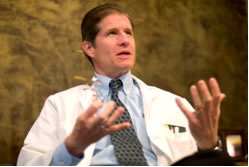
Wayne B. Jonas, M.D.
We have all been inundated by the mythical promise of cures from fraudulent presenters, and the result of those untested, unproven, and unfounded promises has created a culture of distrust, cynicism, and fear that thwarts the reemergence of those healing practices that represented not only viable alternatives, but, in many cases, the only alternatives that were available to our societies less than eighty years ago. As we more clearly understand that the human body is a comprehensive system that interacts within itself on a myriad of levels, we also can begin to understand why individual responses to certain types of healing modalities also produce very different results, i.e., Systems Healing.
The philosophies, beliefs, and practices of the American Board of Integrative Holistic Medicine, a major group of practitioners who have come together to provide not only education, training, and additional resources to physicians in general, have also come together to ensure that those Systems Healing practices that were pushed aside for the promise of high tech and high chemistry are reintroduced to medicine and healing in an appropriate and informed manners. Their work is not new to mankind, to medicine, or to healing, but it is a reemergence of those long proven, highly embraced modalities that promote and support health and wellness, the new paradigm?




This is exactly each an awesome content and articles document really quite quite beloved reading. This isn’t on daily basis i feature capability to work out a huge concern
I exactly got what you mean, thanks for posting. And, I am too much happy to find this website on the world of Google
I exactly got what you mean, thanks for posting. And, I am too much happy to find this website on the world of Googlehttps://yadongcam.net/yd0_korea
https://www.tvwiki1.com/ You have done a great job on this article. It’s very readable and highly intelligent. You have even managed to make it understandable and easy to read. You have some real writing talent. Thank you.
https://bbangtv.com/
Acknowledges for penmanship such a worthy column, I stumbled beside your blog besides predict a handful advise. I want your tone of manuscript…
https://drg01.com/ “Good post! We
https://oncacity.com/
Maximize your plasma donation earnings with the CSL Plasma $700 coupon 2024. This generous offer is designed to reward new donors with significant financial incentives. By participating, you can make a meaningful impact while benefiting from this substantial compensation. Don’t miss out on this exclusive opportunity!
https://oncacity.com/
Maximize your plasma donation earnings with the CSL Plasma $700 coupon 2024. This generous offer is designed to reward new donors with significant financial incentives. By participating, you can make a meaningful impact while benefiting from this substantial compensation. Don’t miss out on this exclusive opportunity!
https://cutt.ly/meGfohm2 Some what you want to know about pills. Read information now.