One of my many college roommates, Mark, graduated with a perfect, straight-A GPA. In those days the grade point average indicating perfection was a 4.0. He worked harder than anyone I had ever known, and hardly took even a few minute break from studying. For all intents and purposes, he had virtually NO social life, and, except for the occasional pinochle game and a coke-and-pizza break between study sessions, Mark was 100 percent committed to perfection in his grades. As he became more and more sure of himself over the years, he would walk into our apartment and yell out, “Another day, another A!” and mean just that.
One of the greatest challenges of my life has been finding those measuring sticks that quantify our accomplishments. In fact, the quest to solve just that ongoing problem has caused me plenty of sleepless nights. I know, for example, that the infrastructure established for our research institute was so singularly unique, so perfect, so incredible that it should become an international model. In fact, when the National Cancer Institute evaluated just one aspect of the institute, they indicated that the tissue repository was “The Only Platinum Quality Tissue Repository in the United States.”
As my time away from the hospital and research institute quickly approaches twelve months, my passion for the accomplishments that we experienced there has become even more clear to me, but where is Judge Simon when you need him? How do you grade them? Worse yet, how does one convince his former peers that the design that grew out of the ideas that became the philosophy of our hospital should be treasured as a new way to achieve perfection on multiple levels? …Another Day. Another A.
Having an infection rate that never went above 1 percent; an extremely low length of stay (3.2 days); low readmission rates, low restraint rates, unbelievably low litigation rates that almost didn’t register on the charts at all.
If your CFO is reading this, simply add the following to each one of those accomplishments . . . $$$. How does a small hospital in Western PA with one major health care plan produce a bottom line in excess of $2M? More importantly, why wouldn’t every hospital administrator want to adopt these approaches?
So what’s the “secret sauce?” We did this by working endlessly to create a truly healing environment, not to be confused with simply doing our jobs well . . . that was a given. We all had to do our jobs well, AND create an environment that fostered a healing atmosphere.
People actually got a chance to begin the healing process. By eliminating overhead paging, permitting loved ones to stay over with 24 hour visiting, as well as pet, aroma, music, and humor therapies, integrative medicine, kindness, a commitment to nurturing, patient centered care and a total commitment to the creation of an optimal healing environment, we began to see outcomes that were previously thought to be literally unthinkable.
Why Healing Hospitals? Transparency. Human Dignity. Patient Advocacy. All of these represent a new way of administering health care in this country. Our industrialized model of care in the mirror image of factory-like settings is no longer acceptable, viable, or an alternative. We, as a country, as a society –as a culture, need to step up and do what is right. Love, kindness, nurturing, and a commitment to patient advocacy are the correct ways to interact with our patients.
Many organizations who embrace the various human dignity monikers such as Planetree and Eden Alternative do so for marketing clout, for positive press, or for hoped-for financial gains. Upon meeting some of these leaders, transparency becomes a very recognizable trait because they themselves are transparent –and not in the good sense. Rather, they are transparently “takers” in an environment that is much better served by “givers.”
For a country that is so obsessed with standardized tests, our healthcare delivery scores are abysmal, astonishing, and asinine. Not unlike our appetite for Biggie fast food meals and Biggie drinks, our appetite for beautiful trappings without substance, for corporate jets, for the power of millions and in some cases billions of dollars in reserves has resulted in a dysfunctional health delivery system that looks at patients as widgets.
Nicholas D. Kristof NYT photo
Nicholas Kristof, New York Times Op-Ed columnist has written another compelling article about the U.S. health system, in which he quotes the latest World Health Organization figures. (Download the .pdf file.)According to the WHO report, the United States ranks 37th in infant mortality (partly because of many premature births) and 34th in maternal mortality. A child in the U.S. is two-and-a-half times as likely to die by age 5 as in Singapore or Sweden, and an American woman is 11 times as likely to die in childbirth as a woman in Ireland. He then quoted another study, a recent report by the Robert Wood Johnson Foundation and the Urban Institute that looked at how well 19 developed countries succeeded in avoiding “preventable deaths,” such as those where a disease could be cured or forestalled. The U.S. ranked in last place. Dead last.
He did find one health statistic that is strikingly above average: life expectancy for Americans who have already reached the age of 65. At that point, they can expect to live longer than the average in industrialized countries. That’s because Americans above age 65 actually have universal health care coverage: Medicare, he writes. Suddenly, a diverse population with pockets of poverty is no longer such a drawback.
Learning how to convert your hospital to the standards of Healing Hospitals is not rocket science. It is, however, not without tough decisions, aggressive doses of nonconformity, a passion and commitment to patient advocacy, and a strong desire to improve infection, readmission, restraint, and mortality rates. It can be done, but it takes guts, a break from the conventional, unconventional wisdom, and a willingness to do what is not only right …but also what is very, very smart.
As I was moving some books around today, I noticed a paper that had fallen out of an old notebook. At the top of the page was the title Growth. Although the year does not stand out in my memory, the circumstances do. If a guess was involved, it would be ’05 or ’06, but no date was present. The situation was one of determining not only how to avoid laying people off because of necessary budget cuts, but how to grow the organization, so that all of the staff could remain employed and get their raises on an ongoing basis.
Of course, there were a list of issues relating to attracting physicians and patients. That “yada yada” list included traditional ideas like recruitment, increased marketing in a new clinic, new equipment for the breast center, expansion of the Emergency Department, performing more traditional surgical procedures, a higher-slice CT scanner, etc.
Then, there were the decidedly non-traditional ideas, like the addition of a data fusion center, increased uses of integrative medicine, a minimally-invasive bariatric center, expansion of the laboratory to include proteomic and genomic testing, management of donated tissue, and telemedicine were all there.
Looking back at that time in my CEO tenure, all of those ideas came to fruition, along with a 3T MRI with breast coil, and every one of these changes came with a certain amount of dissonance and conflict. When it all came down to it, however, the piece that worked the best – the area of concentration that yielded the most profound growth, – the ultimate, saving grace was that of producing a healing hospital.
On that same piece of paper was this note: “We must attract a heart-centered musician to work with the patients and their families.” We found that woman, Rachel, and along with her cohorts, Jean (who did aroma therapy, Reiki, and drumming), the music of healing and transition began. Later, physicians like Dr. Kelly brought flower essences and a half dozen other healing modalities. People were uplifted, reconnected, and relaxed. Through the use of therapeutic music, we gave the patient what they needed at the moment.
Each week, it will be my goal to give you a peek into the world of healing hospitals where people don’t come for an oil change, a new body part, or a shot of life, but rather a place where people go to heal. As a country our medical facilities have been lured into becoming factory-like for the sake of survival, but what we found was that the more humanness, the more loving, caring attitude, the more hope and help we could give in nurturing the body, mind, and soul, the better we did, the bigger we grew, and – most importantly – the happier our patients, their families, our physicians, and our employees became.
For the past several months, I have been searching for a new blog title. Nick’s Blog, NickJacobs.org, Ask a Hospital President, Taking the Hell out of Healthcare… none of them really told the story of my passion, my drive, my desire to change healthcare in a way that would be meaningful for every patient, every employee, and every physician. Finally, the idea of what exactly I believe in, try to strive for, and teach hit me: “Healing Hospitals.” Not only do I believe that we can make our hospitals healing places, I also believe that we can heal the hospitals themselves.
Nick Jacobs, FACHE – HealingHospitals.com
For too many years, the Socratic style of teaching our docs has basically made many of them as tough as professional football players. We have experienced “The Old Guard” in nursing, where, when new nurses come on board the older nurses are encouraged to “eat their young.” We also know that the over-utilization of overhead paging, blood tests in the middle of the night, loud staff members, et al lead to what can only be described as a tense environment.
For the past 20 plus years, we have advocated a kinder, gentler hospital environment. During that time we have introduced all types of non-traditional healing environments, integrative medicine, roving psychologists, drum circles, aroma, music, pet, and humor therapy as well as the elimination of bullies from the medical staff.
These are just a few of the very effective mechanism that can be introduced to create healing environments in hospitals. Healing gardens, labyrinyths, 24 hour visiting, double beds in the OB suites, and the beat goes on and on with decorative fountains, fireplaces, skylights, balconies, but most importantly dignity and respect amongst all staff and visitors toward patients. So, “Healing Hospital” has multiple meanings. Healing will take place more quickly, thoroughly, and meaningfully in these facilities, and the entire staff will be charged with the promotion of healing by creating an overall healing environment.
Well, I’m sure if you type in nickjacobs.org or even Ask a Hospital President.com you’ll still get to us, but remember that our overall goal, our direction, our mission, our passion, and our job is to help you to create healing environments where infection rates drop, as will lengths of stay, readmision, restraint and mortality rates. Call us at SunStone Consulting, LLC. 412-992-6197.
Those who have worked with me know that I have been unequivocally one of the most loyal supporters of the PlanetreePhilosophy of care in the world.
My former place of employment was the third Planetree hospital in the country, after Planetree’s headquarters moved to Griffin (Derby, CT.) We were the first Planetree hospital in Pennsylvania, and that hospital, Windber Medical Center, is now one of the top ten Planetree-designated sites internationally. After having served on the Board of Directors of Planetree for nearly eight years, having written literally dozens of blog posts and articles about Planetree, having taught numerous online seminars for them, contributed a chapter to their latest book, and served on the Planetree Speaker’s Bureau for half a dozen years, I’m back once again with a presentation this Tuesday at the Planetree 2009 conference. It’s called: Take Care of Your Employees and They Will Take Care of Your Patients.
Although I was encouraged to retire from the board in order to give newer members their opportunity to participate, and am no longer a part of the Speaker’s Bureau, with no formal ties to the organization anymore, I want to assure you that my experience, passion, and commitment to humanizing healthcare, transparency, creating a nurturing environment for patients and their families could not be stronger.
Since my transition from formally running hospitals full time, I have immersed myself deeply into the world of helping hospitals through my consulting practice to achieve the patient, employee, and family satisfaction ratings that ensure top scores in HCHAPS which, in turn, will result in increased business, increased revenue, and increased growth for any organization.
Nick Jacobs, FACHE
I am including one of my lastest articles on Integrative Health written for Hospital News. Remember, if I can help, just call, e-mail or or comment:
Integrative Medicine
Massage, Flower Essences, Spiritual Healing, Drumming, Reiki, Acupuncture, Music, Aroma, Humor, Pet, and Art Therapy; all of these healing practices were formerly referred to as Alternative or Complementary Medicine. They deserve, however, to be referred to as Integrative Medicine. Because, when we integrate these various disciplines with other contemporary healing methodologies, the results can be amazing.
As a hospital CEO, it brought me great satisfaction to introduce all of these treatments to the healing environment of the hospital. Many times they came amid intense resistance from both the medical staff, and some members of leadership. In fact, after nearly 10 years of offering comprehensive exposure to Integrative Medicine, we still had a smattering of nonbelievers. The only thing questionable about these therapies for a healthcare administrator is that the typical insurance companies don’t cover the costs of all of them and cash payments come into play.
The number of patients coming to our facility had tripled through the emergency room alone as did the overall budget of the entire organization during that time period. Those “Forest for the Trees” practical leaders still could not bring themselves to give credit to one of the major contributing factors involved in that surge of the hospital’s popularity. Yes, of course, we also encouraged 24 hour, seven day a week visiting, had guest beds in many patient’s rooms, and served meals to the families on the medical floor where their loved one was a patient. Did all of this combine to the create a healing environment? Of course it did, but Integrative Medicine was the heart and soul of the difference.
Their skepticism seems to fit into the cycle of questioning the validity of wellness and prevention, two comprehensively established methodologies for improving general health and well-being, proven over centuries of unofficial clinical trials. Wellness and Prevention works, but because the insurance companies have not yet fully embraced these philosophies, then some still say that they are not valid. Treating sickness can be as comprehensive as ensuring wellness. For whatever reason, some of our medical and administrative leaders often confuse reimbursements with healing, and forget to add new patients and additional income from related disciplines like PT and OT to the equation.
As a nonmedical, nonscientist, it was easy for me to understand why the various integrative arts worked so well for our patients and their families. From the old song, “All You Need is Love,” you could easily enjoy the looks on the faces of those patients and family members who used these treatments to receive sorely needed relief from whatever pain or loneliness they were experiencing. It doesn’t matter if you’re eighty minutes or eighty years old; touch, nurturing, and love all remain critical in our lives. Have you seen the statistics on how much better people do with pets than without, or how many babies died in orphanages due to the “failure to thrive?”
None of these ancient arts were created because the scientific method produced FDA approved results in trials of 200,000 or more. They evolved into centuries old healing arts because they provided relief and help in a time when leeches, bleedings, and a lack of hand washing were the accepted medical treatments. The tribal shaman, medicine man, healers, and other spiritual leaders all knew what the subtle and not so subtle impact of their work meant to their fellow human beings.
We have casually observed the use of these healing modalities on patients who have experienced restored feelings to otherwise numb feet.
We have seen them relieved from debilitating back pain, healed from hopeless wounds, saved from surgeries due to the opening of blocked intestines through acupuncture. We have observed psychological breakthroughs from drumming that had never been reached by traditional therapy. Truthfully, I didn’t care exactly what made our patients better, just that they were better, and the results were dramatic, with an infection rate of 1% or less, a 3.4 day length of stay, a low readmission rate, and the lowest mortality rate for adjusted morbidity in the region.
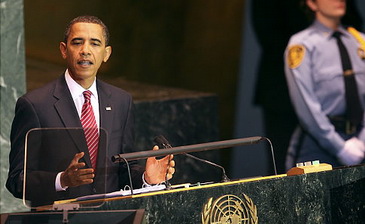
The time has come to realize that the old habits, the old arguments, are irrelevant to the challenges faced by our people. They lead nations to act in opposition to the very goals that they claim to pursue — and to vote, often in this body, against the interests of their own people. They build up walls between us and the future that our people seek, and the time has come for those walls to come down. Together, we must build new coalitions that bridge old divides — coalitions of different faiths and creeds; of north and south, east, west, black, white, and brown.
The choice is ours. We can be remembered as a generation that chose to drag the arguments of the 20th century into the 21st; that put off hard choices, refused to look ahead, failed to keep pace because we defined ourselves by what we were against instead of what we were for. Or we can be a generation that chooses to see the shoreline beyond the rough waters ahead; that comes together to serve the common interests of human beings, and finally gives meaning to the promise embedded in the name given to this institution: the United Nations. (President Barack Obama’s Speech to the United Nations)
Interestingly enough, there were 22 years in a row when I could have made the same speech (Okay, it would not have been rendered as eloquently as the President’s, but the content would have been similar.) The most disconcerting thing about this statement is that I was referring to the internal stakeholders of many hospitals. One of my favorite statements during those years because of all of the infighting was that “We are not the enemy.”
An enormous amount of energy is expended in almost every healthcare organization on internal power struggles. In many cases these struggles revolve around issues relating to money. Questions like “Should the radiologist or the cardiologist be permitted to perform one particular test?” Turf battles over procedures always seem to be part of the equation. Other struggles revolve around perceived power relating to whatever positions are held because someone wants more control of larger pieces of the budget.
Power, control, greed? All of these traits are part of the human experience, but when an organization expends much of its energy on these issues, the result is wasted time, wasted resources, wasted anguish, and, in many cases, lower quality outcomes.
Watching old movies of workers in factories during World War II have always fascinated me because we, as a country, had found a common enemy toward which we could focus our angst. The fact that health care never seemed to be able to embrace illness as the common enemy always created intrigue for me. Yes, we would rally and work together when emergencies hit, but the other daily activities became somewhat mundane and boring, and our instinct seemed to be to revert to power, control, and greed.
Maybe, just maybe, we could find a way to marshal the medical staff, employees, and administration, the volunteers, and patient families to work together every day in every way to create an actual healing environment where patients can be surrounded with the energy of love, kindness, respect, dignity, and healing. Maybe this environment could be the goal of every hospital executive, and they could begin and end each day by focusing on setting the example for the creation of a healing environment.
Over the years it has been my aspiration to try very hard to help you laugh, and, regardless of the depth of the topic, I’ve always looked to find humor somewhere in the message. For example, potty training, Smokey the Bear, flying DVD’s, even old dogs with no tricks.
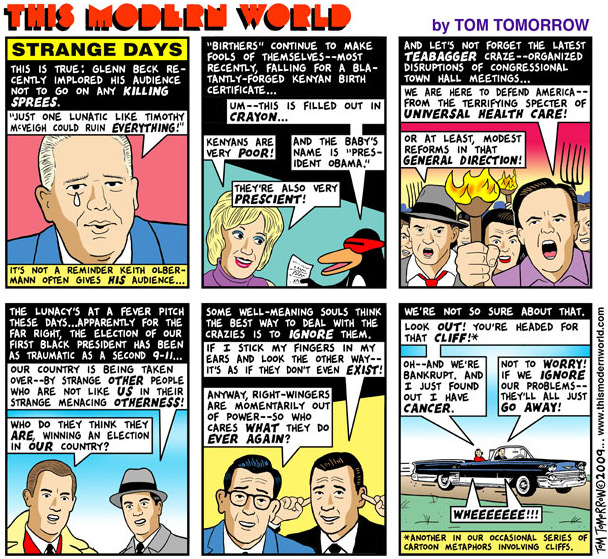
Today, however, I am writing about an issue that may inflame some of you and prove to be very troubling to others. It’s not my goal to do either. I’d just like to bring into focus the crazy stuff that seems to be taking us over, a kind of Bird Brain Flu that doesn’t have a vaccine and that appears to be enveloping our nation.
You see, it is my humble opinion that we as a country have reached a new low point in dumbness. The wild, inflammatory rhetoric, a/k/a crazy talk that’s being spouted every day, appears to be pushing the fringe players out from under their rocks and their basement fortresses. This political flu is taking us to levels of foolishness that are so low that even a Limbo expert couldn’t fit under the broom stick.
Have you noticed how open public hatred and outright prejudice has become? It’s like we’re living a rap song from Gran Torino. Each and every day we hear the ranting of media talking heads leading the charge to endorse this movement. For those of you who have read my work over the past few years, you know that I personally am repulsed by bullies, by racists, and by those who believe they are superior to other human beings.
The new accusations and sick suggestions that are the current craze are veiled as protests regarding big government, health insurance reform, and a lack of confidence in the ship of state. What they really seem to be, however, is fear and lack of tolerance for our President. So what if you don’t like him? There still have to be some limits and boundaries. Are there any more lines?
I’m telling you, the crazies are coming out from their caves. Seriously, watch out for them. Many of these radicals are great examples of why some animals eat their young.
Just last week on a trip to Washington D.C., I had to be evacuated from the Pittsburgh airport because a passenger was carrying a defused hand grenade in his suitcase. What is the single thought that must be in the mind of any individual who believes that a weapon, even, as it turned out, an inert one, such as that grenade, would be okay to pack for your plane ride? Let me guess. That thought was “Duh?”
It seems that every time some poor innocent gets shot in this country, there was some fringe individual who believed that he was not only given permission to take their life, but that there was an overwhelming endorsement of his actions that would somehow vilify him from any prosecution, and reward him with glory. Does that sound like the Jihadi 72 virgins thing to you?
Yes, we have freedom of speech. Yes, we have the right to bear arms, but do we have the right to just be nuts in public? Maybe instead of statins in the water system to control cholesterol, or fluoride to prevent tooth decay, we should start putting Zoloft or some other selective serotonin reuptake inhibitors (SSRIs) in that keep the brain from becoming unbalanced.
What’s wrong with love, kindness, and the golden rule, of doing to your neighbor as you would have them do unto you? Can’t we look for compromise without demonizing those with opposite views?
Can’t we stop endorsing or even worse stop inflaming those with extreme views? When is enough enough? When will we return to civility, to compromise, and to brotherhood? Would you rather have peace, love, and rock ‘n roll, or “Go ahead. Make my day, @#%&+^@#”?
President Obama’s eloquent address to Congress on his proposed changes to the U.S. healthcare system was fraught with ambiguous issues that will certainly provide a feeding frenzy for opponents. When the President stated that “This country’s failure to meet this challenge year after year, decade after decade has lead us to a breaking point,” he was exactly correct. We are the only industrialized nation in the world that has not addressed this challenge.
There are too many people without coverage of any kind who use emergency rooms as their primary care physician. Unfortunately, the difference in cost between a visit to your emergency room vs. a visit to a physician’s office is exponentially different.
If we, as a country, do not believe that we are paying for these patients in some real way, then we are not cognizant of how the system is being contorted in order to allow hospitals to remain solvent. When you hear individuals complain about the high cost of Q-tips in a hospital, it’s because they are being priced to help cover the losses being incurred from the millions of uninsured.
So, what is it that we must address? When the President said, “Under the present system, due to job loss or illness, many could lose their coverage,” he was totally accurate. Unfortunately, millions of Americans have come to experience this phenomena first hand, and could lose their homes, investments, and their possessions because they have no insurance. So, as President Obama appropriately questioned, “What is the best solution that is both moral and practical and best reflects the ideals and freedoms upon which our country is based?” He was clear to explain that implementation of either a Canadian-style system or an individual based system would both be a radical shift, and each represents extreme positions that would completely change the way healthcare is delivered in this country.
So, if we eliminate the extremes and concentrate on compromise, we begin to see signs of conciliation that might be embraced. For example, there appear to be very few people who would argue against providing “more security and stability to those who have health insurance.” The majority of Americans also seem to embrace the concept of providing some type of coverage for those who currently have none.
What the President and most of our elected representatives are avoiding in the conversation is talk about quality, safety, end of life care, wellness, prevention and outcome data.
David B. Nash, MD
I had the fortuitous opportunity to hear David B. Nash, MD, MBA and Dean of the Jefferson School of Population Health’s presentation on Population Health. At the risk of misquoting Dr. Nash, I will carefully attempt to touch on only a few of the facts, figures, and points that he made in his analysis of what it would take to fix the system.
One of the most profound points that Dr. Nash made was in seeking the answer to the following question:
What percent of adult Americans do all the following?
Exercise 20 minutes 3x a week
Don’t smoke
Eat fruits and vegetables regularly
Wear seatbelts regularly
Are at appropriate BMI (Body Mass Index)
The answer surprised even this writer. Only 3% of American adults are following all five of these wellness and prevention guidelines, and 40% of deaths are the result of smoking, unhealthy diet, physical inactivity and alcohol use. In an interesting analysis of the President’s healthcare speech, finance author J. André Weisbrod writes: “I see it as a Darwin Awards kind of issue. You are free to be stupid and I am free to not have to pay for your stupidity…”
Bundled payments, end-of-life counseling, evidence-based medicine, an emphasis on quality and systemic approaches to ensuring safety are only a few of the myriad suggestions recommended in Dr. Nash’s presentation. Bottom line? The third rail of politics is limiting honest, open dialogue regarding reform, and time is running out.
About two years ago, I had a call from my local bank asking if I had purchased a washer and dryer… in Barcelona, Spain. Somewhere, someone had gained access to my credit card number, and used it illegally for that purchase overseas.
It was not too long after that that another bank informed me that my card had to be canceled because of a data breach at a national chain store where I had purchased some clothing. (I have since come to learn that this data breach has already cost their parent company over $220M.) Then, a few weeks later, another card had to be canceled and re-registered. Finally, about three months after that, restrictions were placed on still another set of cards due to similar, but entirely unrelated breaches. Three cards, three banks, multiple breaches …and my wallet was still firmly tucked in my back pocket.
In a recent article in Forbes Magazine, the facts and figures of this new, growing phenomena were outlined statistically so as to begin to bring some sense to the table regarding what we are facing. The authors, Joe Carberry and David J. Chamberlin state that “Only 36% of C-level executives are confident their organizations will not suffer data breaches in the next 12 months.”
As healthcare gears up to go completely electronic, we must remember that there are, for all practical purposes, entire countries dedicating serious efforts to breach the United States data banks. Hackers are no longer identified as stereotypical, 98 pound computer savants. Many of them are professional criminals and terrorists. As a former CEO, I always had to be cognizant of the risk, then do whatever we felt we could afford to do to help mitigate that risk. Rarely, however, have I seen any type of comprehensive commitment to a comprehensive, multi-faceted approach to this effort.
The laws that address data breaches involve not only civil but also criminal penalties, and the individual laws of various states are most times very different. It doesn’t matter if your business is located in only one state. What matters is where your customers are from, and if they are a diverse group, you must comply with each
state law regulating breach notification.
SunStone Consulting, LLC, and Immersion Ltd., through their InfoLaunch suite of products, are positioned to assist you to prepare for any type of breach. As Carberry and Chamberlin state, preparation must involve not only legal, but also communications, the C -suite, and risk management. They further recommend the following steps:
1. Be prepared
2. Move quickly
3. Take action, and
4. Be responsible.
The professional reputation damage that could be encountered by the hospital or physician practice that is not responsible, not prepared, slow moving, and not action-oriented can be devastating.
As a hospital CEO, one of the greatest challenges that I faced was that of resource allocation. Because my personal goals included making our organization:
A facility that became recognized for its very high quality physicians
A Planetree facility where you never had to “leave your dignity at the door”
State of the art in every technological area
The employer of choice in the area
…our financial challenges were sometimes overwhelming. This hospital was located in an area where the average salary was only $22,000 a year, the population continued to decrease, and there were three other hospitals within about eight miles of this facility.
Due to these very real financial challenges, many of my nights during the eleven years of my presidency were sleepless ones. Consequently, it has become my personal mission in my consulting efforts to help remove the barriers for my former CEO peers so that they can meet their personal goals through a “Get, Find, or Save” philosophy.
Under the “Get new sources of funding” category, one of my successes was that of creating alternative solutions to very challenging problems. Many times we found new financial resources by following the “Road Less Traveled.” Although not all of these journeys were fruitful, the ones that were deserve to be replicated, so that other CEO’s might generate funds for their organizations using knowledge learned and perfected through these personal trials and errors. Included in this list were efforts in areas such as sophisticated diagnostics, the use of new high technology modalities, high-touch integrative medicine, special packages for wellness and prevention, a community workout facility, the use of molecular testing, and many more.
The “Find” portion of this equation comes from my associates at SunStone Consulting. Their particular skills and talents learned through years of work with the largest accounting firms have resulted in unique, proprietary software and knowledge that allows them to uncover monies already generated by your organization that otherwise might never be collected: Worker’s Comp, Transfer DRG’s, Pharmacy Charge master analysis, and a half dozen more areas bring these funds straight to your bottom line.
Finally, the “Save” piece of this puzzle is coming from a dozen new ideas, products, opportunities, and technologies that until very recently were generally unknown. Everything from software that provides your physicians with Continuing Medical Education Credits for researching their own patients to new Hazardous Medical Waste Recovery to FDA-approved technologies to identify wounds that have not yet manifested themselves. All of these are on the pallet for potential use in a hospital or clinical setting.
As the Executive Director of a 501(c) 3, nonprofit organization back in the early 1980’s, I remember hearing for the first time a hard core description of the personal qualities that should be considered by the executive when looking for a board member. While the original board member recruitment philosophy had been to seek out people who would either Work for or would bring Wealth or Wisdom to the organization, this particular advisor said, “We are looking for people who will Give Money, Get Money, or Get off the Board.”
Well, if you are looking to find already-earned yet not collected resources, to create new resources, or to work with companies that bring you extensive savings and value, or if you are just looking for a little more sleep, look to those who have successfully navigated the white waters and thrived.
F. Nicholas “Nick” Jacobs, FACHE, is Senior Partner at (SMR) Senior Management Resources, LLC. In that capacity he provides transformative, strategic solutions to companies, organizations and individuals. He has decades of experience in hospital management, with an acknowledged reputation for innovation and consumer-centered leadership.
Throughout his career, Mr. Jacobs has developed a reputation for innovative leadership that focuses on effective delivery of service that puts the patient’s needs and concerns first. He speaks extensively on this topic and has spoken for the American College of Healthcare Executives, American Hospital Association, and the World Health Organization numerous times.
 One of my many college roommates, Mark, graduated with a perfect, straight-A GPA. In those days the grade point average indicating perfection was a 4.0. He worked harder than anyone I had ever known, and hardly took even a few minute break from studying. For all intents and purposes, he had virtually NO social life, and, except for the occasional pinochle game and a coke-and-pizza break between study sessions, Mark was 100 percent committed to perfection in his grades. As he became more and more sure of himself over the years, he would walk into our apartment and yell out, “Another day, another A!” and mean just that.

 Many organizations who embrace the various human dignity monikers such as
  Nicholas D. Kristof NYT photo

 These are just a few of the very effective mechanism that can be introduced to create


 If we, as a country, do not believe that we are paying for these patients in some real way, then we are not cognizant of how the system is being contorted in order to allow hospitals to remain solvent. When you hear individuals complain about the


 The laws that address data breaches involve not only civil but also criminal penalties, and the individual laws of various states are most times very different. It doesn’t matter if your business is located in only one state. What matters is where your customers are from, and if they are a diverse group, you must comply with each