Healing and the Mind Revisited

April 8th, 2009 by Nick Jacobs 4 comments »

I’m working in Chicago right now, feeling a little overwhelmed by a phone call that I had from one of my very dearest friends about his impending future, about my son-in-law in Baghdad and his family who are living without him at home, and also about the challenges that we individually and collectively face both nationally and internationally during this time of economic crisis and overall unrest. During the midst of my thoughtful contemplation, I received an E-mail from a very dear friend, Savery, with a link to open. I was so moved by it that I decided to post the link on Facebook.

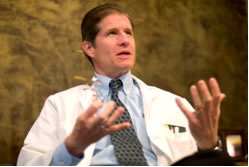
Almost immediately after it went out, my friend, Dr. Dean Ornish, sent me this follow up link from Bill Moyer’s show. For those of you who don’t know this about me, the Bill Moyers series, “Healing and the Mind” was my inspiration for the Planetree Philosophy that we implemented at Windber all those years ago. For some reason, he and I keep intersecting, and here we are again.

So, thanks, Savery, Dean, and Bill, but most of all, thanks to the amazing man who created this wonderful experience that you are all about to have.

Share

NickJacobs.org???

April 2nd, 2009 by Nick Jacobs 91 comments »

Let me open this blog with a little housekeeping chore. Because I’ve retired from being a hospital president (Yes, they replaced me with two great people, count ’em, two.) , I’d like to change the name of this thing. It’s not that I’ve established a P-Diddy-type Twitter following where 100,000 human beings are waiting with baited breath to see what my next move will be, it just doesn’t seem right to keep calling myself a hospital president. We know who reads this thing, and we are grateful to our loyal, talented, and brilliant followers. We also know that we can link the old blog names to get you here. So, regardless of what you typed, or what gets Googled, our genius social media maven & webmaster, Michael Russell, can help to bring you home to this site.

Okay, so as a transformational advisor, a broker of sorts, most people with whom we have consulted have described me as a person who can fix things that are broken before they actually break. Maybe we should call it the “Break it if it’s not already fixed” blog. I’d love it if it was a name that would generate millions of hits and companies would fight to advertise on it.

My first thought was to use nickjacobs in the title because there is a Nick Jacobs on Facebook who teaches Aboriginal people in Australia, and he seems popular. There is another Nick Jacobs who is a professional organist, and one who is an athlete. There’s a Nick Jacobs who is a consultant and another a paramedic in London, one who had a blog who is a yachtsman, there’s my son, the commercial real estate broker, and finally, there’s a Nick Jacobs who does pornographic movies who is not my son. Actually, that Nick Jacobs’ followers would probably be the most disappointed by this blog.

Since the .com version of nick jacobs was already taken by some guy in England, we captured nickjacobs.org, and that will work for right now.

If you have any ideas, however, that you think would really rock the blogspere, let us know and we’ll check with our domain registrar to see if it is available. In fact, if you are the winner of a Name Nick’s Blog Contest, I’d be happy to consult for free BY PHONE for at least one hour of brainstorming with you about the topic of your choice: music, healthcare, proteomics, teaching, PR/Marketing, the travel business, or even physician recruitment.

Remember, Hospital Impact is already taken, and, because my last three consulting jobs have been with a newspaper, a nonprofit arts oragnization, and a chain of hotels, we don’t want to think too restrictively. Gotta earn a little money, too.

When we ran the breast center, we found that the website got more hits than anyone could imagine. The problem was that the readers were mostly thirteen-year-old boys who probably weren’t too interested in running a hospital. After Miss America had visited us, the hits went up exponentially when those two searches were combined. Somehow, I don’t think that Nick Jacobs’ Breast Center for Miss America would probably get me the type of following I’m currently hoping to attract. On the other hand?

A very good friend recently asked me to write a brief bio about what my new life is like, and it struck me that it is very much like my old life but without any restrictions. This is what I wrote:

While teaching junior high school instrumental music in the early 1970’s, Nick Jacobs made an extraordinary discovery. He learned that, by empowering his students and surrounding them with positive influences, he no longer was providing a service or even an experience for them.

What this entirely unique teaching style resulted in was a method for helping to transform students. By providing with both passion and commitment the tools needed by them to undertake their journey, his involvement with the students became a means of dramatically helping them to make whatever positive life changes they were seeking.

It was during that early period in his career that he also discovered that this formula could work to positively change lives in almost any aspect of living as he ran an arts organization, a convention bureau, and finally a hospital and research institute.

Since that time he has dedicated his personal work to helping others make their lives better, and that is exactly what he is doing in his position as an international executive consultant with SunStone Consulting, LLC.

Maybe that will give you something to chew on? Okay, something on which to chew.

SunStone Consulting. With more than 20 years experience in executive hospital leadership, Nick has an acknowledged reputation for innovation and patient-centered care approaches to health and healing.

Share

&%$@# the Network

March 27th, 2009 by Nick Jacobs 2 comments »
When it came time to set up my office with wireless communications for my computer and printer, it took three men and a baby to finally get it to work. First, set up appointments to schedule the technicians to come, and then wait for the required four hours. They never come at the beginning of that time window. Then, when they don’t show up, you have to run outside and stop them from leaving because they always say that they couldn’t find your eight story building with the two foot high numbers on the door.


Shortly after the installation, everything stops working, and everyone has to be called back from the cable company for one more dance. My speed dial is now populated with special 800 numbers that give you 42 menu selections in Spanish and English.

So, my cell phone broke. You’re probably thinking, he’s some big executive, just call the phone staff. Well, truthfully, my name now appears under the Administrative Consulting division as that phone person, too. So, my first stop; the phone store. After waiting for about 47 minutes, someone says, “Can I help you?” “Sure, my phone is broke,” I respond. The technician looks at it and says, “Yes, it is broken.”

He then walks away, only to return several minutes later to say, “We’ll arrange for you to get a replacement phone.” Well, there are no replacement phones in stock anywhere within the greater metropolitan area. “Here’s a rebuilt one, Mr. Jacobs, good as new.” When I ask them to transfer all of my information to the new phone, the attendant says, “No problem.”

About an hour later, she hands me the phone, and I head for home. In about 13 minutes, I realize that my calendar, my pictures, my text messages, my business E-mail account, and my personal writings are all gone, wiped out, erased. My heart begins to beat like a bunny in hunting season.

No calendar, no back-up, no idea even what I’m doing tomorrow. I called to happily discover that the old phone was still there 24 hours later. As I raced to get it, the young woman behind the counter hands me a few pieces of paper, and says, “Good luck copying that calendar.”

It seemed odd that she could transfer 2,800 addresses but no appointments, or pictures, or business E-mail. So, I scribbled appointments, returned to the office, and spent three hours putting them in the calendar. Then I discovered that this phone could NOT read the memory card. I went to the next store, told my tale of woe, and they said, “No problem, we’ll get you another phone.” Well, this time, I explained what had happened re: the kind of effort it took to install the calendar dates. They smiled and said, “We can do that for you, just bring it back.”

Of course, when the phone arrived, I went to the store to have the transfer, waited an hour, and they informed me that it was impossible, but that I could easily set up my computer to do the sync at home. I couldn’t! So, the help line was next from 12:30 PM until 5:30 PM, and five people tried to help from the wireless company, but no luck. “The $%#@$ number you have reached is out of service.”

Share

TED and “me?”

March 20th, 2009 by Nick Jacobs 7 comments »

Okay, I’ll admit it. I’ve been obsessing over TED. If you aren’t sure what TED stands for, it is an abbreviation for (Technology, Entertainment, Design) and TED is an invitation-only event where the world’s leading thinkers and doers gather to find inspiration. It’s in California, of course.

While spending an absolutely delightful weekend a few months ago with several people who were creative, inventive, entrepreneurial, and fun, one of the most highly respected innovators in the world turned to me and said, “You should be on the agenda at TED.” You may wonder what qualifies one to be considered to be one of the most highly respected innovators in the world, but take my word for it, he is. He’s on the faculty of about eight universities, has offices in a couple of dozen countries, and is one of the most sought after creators of innovation anywhere.

Well, little did he know how much that comment meant to me. It shook me up, inspired me, and filled me with excitement. Why? Read that line above again, “an invitation-only event where the world’s leading thinkers and doers gather to find inspiration.” Okay, I’ve been called a futurist, a creative, a right-brained whatever, and several of the things that we’ve done over the years have literally rocked the house (like this blog), but . . . in the world? It always seemed to me that my primary claim to fame was my ability to keep trying when some people not only wanted us to fail, but would probably have like to have seen me personally run over by a cement truck. I was persistent.

I’m not sure where I would fall into that description of the world’s leading anything, but it surely was flattering to have someone of that caliber say that to me. It’s funny, because every time I begin to allow the little ghosts come out of the sewers to pull at my pants cuffs with their negativity, I simply smile and think about our collective accomplishments.

This week alone, our consulting practice has taken me to a publishing company to help their employees begin to create what they would like to have for their future; then to a chain of hotels in New York City where the owner fully comprehends the merits of wellness for his employees; to a biomedical informatics startup company specializing in neuroscience; a nonprofit music group struggling to re-invent itself; and finally to an executive recruitment firm seeking a new business niche.

So, back to TED. If you have ANY interest at all in what goes on there, what gets said there, who speaks there, you probably would be surprised, or not. People like Dr. Dean Ornish, Bono, Bill Gates, Jane Goodal, and former President Bill Clinton have spoken there, but so too has Dr. Alan Russell from the University of Pittsburgh and a hundred other people who have simply made a difference –with extraordinary results. The good news is that, should you have any interest in seeing and hearing any of these speakers, just go to TED Talks on the web, and they’re all there for your inspiration.

For example, in a presentation by Scott McCloud, the cartoonist and comic book artist, we heard: “Learn from everyone. Follow no one. Watch for patterns. And “Work like hell.” Stefen Sagmeister has made his mark by creating public art with sayings displayed in public places like, “Everybody thinks they’re right,” and “Money does not make me happy.” My favorite, however, is “Complaining is silly. Either act or forget it.”

Jill Tarter, astronomer and a world-renowned expert on extraterrestrial life made this comment, “If we are alone, it is an awful waste of space.”

Seriously, take a look at TED and its companion, TEDMED, dedicated exclusively to healthcare innovation. Maybe, in my dreams, I’ll be giving my speech on kindness in the workplace, my 18 minute presentation on life, love, and a kinder more co-operative future.

Hey, we all need a dream. And I, too, have a dream.

Share

It’s All About Transformation

March 13th, 2009 by Webmaster 9 comments »

This morning I had an experience that could only be described as Transformational. My presentation to the World Health Care Congress 2nd Leadership Summit was finished yesterday afternoon and it went as well as could be expected. We discussed HCAHPS, Employee Engagement, Patient/Family Partnerships, Evidence Based Design, and how to appropriately staff the various seats on the proverbial bus.

My flight was not scheduled until Friday, so attendance at the morning sessions seemed like a viable option. Listed on the speaker’s schedule was B. Joseph Pine ll, and his topic was “Work is Theatre and Every business a Stage and Authenticity: What Customers Really Want.”

As Mr. Pine went through his 55 minute presentation, my initial reaction was “Yep, knew that; heard that before; understand that,” but then, during the last five minutes of his prepared remarks, Joe hit us between the eyes with that thing that had always been there but had never become completely clear to me during the past two decades.

He asked us what people wanted when they joined a health club, went to business school, or a psychiatrist? The answer, of course, was that they were looking to be transformed. Each and every day for a dozen years, I have watched this process and never grasped the nature of this metamorphosis.

One of the participants made a point of asking why it was that a person could come to a hospital, have open heart surgery that changed or even saved their life yet would not donate even $200 back to the hospital during the annual fund drive? Yet that same person would leave their entire estate to a university that they had attended fifty years earlier? What was the difference? In both cases something dramatic had happened, but in the case of the open heart surgery, it was just seen and presented as a service or at best an experience.

The university however, provided a significant transformation of the life of that person. This simple description explains why so many open heart patients go back to doing exactly what they had done in the past, and end up back on the table two or three more times. It was seen by the patient as a service or at best an experience.

With this in mind, my observations of what happened to those patients who participated in the Dean Ornish Coronary Artery Disease Reversal Program was that, for the most part, they had joined that program looking for a transformation, and that indeed is what they found. Most of the participants who had come there seeking a total change and a new way of living a more healthful life were transformed by the program. They no longer perceived of themselves as being victims of their health.

How does this all play out in the field of healthcare? WalMart is going to produce a commodity, electronic health records, competing with WalMart on any level will prove to be a fruitless journey because they have mastered the world of commoditizing services. The Starbucks experience may get customers in the door time and time again, but what is it that we need to do that will produce grateful, loyal, generous customers or patients forever? Provide a transformation.

For those of us who are getting this, begin to look at your hospital, your practice, your business as more than just a service and much more than an experience. Think of what you do as providing the tools necessary to transform those with whom you are working, and present your product, your passion, your involvement with the client, the patient, the customer as a means of transforming them. Dedicate yourself to helping them reach their goal of changing their life in a positive way forever, and see where that leads you. TRANSFORMATIONAL CHANGE is what we all seek at some level. The product: To help us make our lives better.

Share

The Not-So-Merry-Go-Round

March 7th, 2009 by Nick Jacobs 10 comments »

Dr. Wayne Jonas, President and CEO of the Samueli Institute, a friend and mentor, testified before the U.S. Senate on February 23, 2009 regarding his views for creating a path to health care reform. Dr. Jonas, a well respected member of the Washington D.C. health community formerly served as the Director of the Medical Research Fellowship at the Walter Reed Army Institute of Research (WRAIR), a Director of a World Health Organization Collaborating Center of Traditional Medicine and a member of the White House Commission on Complementary and Alternative Medicine Policy.

Wayne B. Jonas, M.D.

Wayne B. Jonas, M.D.

It is not my intent to copy this testimony, but only to accentuate some of the salient points contained within his work. Let’s begin by looking at some chilling facts. By 2082, healthcare expenditures will represent 49% of our Gross National Product. This is due to the fact that in 2011, the baby boomers will begin to turn 65 when, in the words of Dr. Jonas, “an avalanche of aging care needs…will bury the current Medicare system.”

Obviously, this is a case where more of the same is not necessarily better and, unless or until the system changes, and we fashion a new vision to create health, we will bankrupt our country. Dr. Jonas then went into the facts and figures that those of us in health care who believe in wellness, integrative medicine, and a holistic approach to healing have known for years. Seventy percent of chronic illness is due primarily to lifestyle and environmental issues, including proper substance use (smoking, alcohol, drugs, diet, and environmental chemicals), adequate exercise and sleep, stress and resilience management, social integration and support, and selective disease screening and immunization.

We are on a not-so-merry-go-round, which has an entire system of illness incentives that are improperly reimbursed, improperly addressed, and inappropriately segmented as if each part of our body was not a component of the whole. It is time to begin to throw the switch and to teach our patients what we already know so that wellness, wholeness, and health can be given a new definition.

Dr. Jonas specializes in Systems Wellness. Dr. Leroy Hood specializes in Systems Biology. We as a country need to demand that our medical schools embrace both concepts as, like indigenous man, we begin to realize that our brains do have something to do with our bodies, as we realize that our commodity driven society does not always promote the BEST food, the BEST exercise, the BEST of anything but, instead, because of the quarterly reports to the stock holders, promotes the most lucrative.

We know that drinking a soft drink with 10 teaspoons of sugar is not exactly healthful. We clearly understand that quadruple cheese anything might eventually catch up with us, or that Uncle Buck’s 72 oz. steak can’t really be good for your arteries. Fried and buttered everything, a total lack of exercise, and more stress than anyone can ever dream of will not extend our lives. There is a reason why most of our physicians die ten years before their patients. Between the battles to get their degrees, the incredibly long hours, the pressure of dealing in life and death issues, and the demands of dealing with a broken healthcare system, they need stress management as much as anyone.

How much further down must we go as a country before we begin to realize that millions of dollars, dozens of expensive toys, mansions, and rich food are not true measurements of success? During a visit to the Netherlands a few years ago, I told my host that I would be back in August. She looked at me, smiled, and said, “Don’t bother. The entire country will be on vacation,” and they were. Many European countries take 52 paid days off per year. Sure, their cars are smaller or they use bikes and generally they may own less clothing, but they are living longer, healthier lives.

Share

Under the Magnifying Glass

February 27th, 2009 by Nick Jacobs 6 comments »

Hospitals and health professionals rate as some of the most highly scrutinized organizations and businesses in the United States. Hospitals and physician’s offices, durable medical equipment companies, and home health agencies are under the magnifying glass of federal, state, and local government inspectors.

Some would say that this is with good reason as we scrutinize the numbers behind the analysis. As annual health care costs continue to ascend toward a projected $2.4 trillion (16.6% of the GDP*) and with health coverage a major political issue this year, the potential of a $72 – $240 billion annual loss (3% – 10%** of the total health care outlay) to health care fraud and abuse and mistakes, remains a major issue for private citizens, corporations and government agencies.

In order to put this in perspective, the overall numbers at play relative to the $2.4 trillion healthcare budget are significant. The monies estimated to be consumed inappropriately reach a staggering $236 – $787 loss per capita, or enough money to insure up to 30.5 million Americans, or 65% of today’s total uninsured population of 47 million.

The pendulum swings both ways in this scenario, however, as these issues occur on both sides of the provider and healthcare user coin. The Centers for Medicare and Medicaid began RAC audits utilizing Medicare Recovery Audit Contractors (RACs) to recoup $980M from Providers in demonstration projects in California, Florida and New York. To say that this system is fair, equitable, and was well conceived would be an exaggeration because the auditors employed to do these audits are paid a percentage of their findings, and that inherent conflict alone stresses the validity of this arrangement on many levels.

A few specialty healthcare finance based organizations like my new employer, SunStone Consulting, concentrate in preparing hospitals for these inevitable visits by the RAC auditors. When these specialty companies do their work appropriately there is no reason for the RAC auditors to destructively move through the billing and medical records departments of each hospital.

The very essence of the problem is that, no matter what the intent, any time federal dollars are involved, these investigating authorities appear to have already made a determination that the problem or mistake was a purposefully fraudulent act whereas, in fact, it is quite possible that it was an oversight, an honest mistake, or an inappropriate key stroke.  To determine the validity of these situations in which fraud, abuse, and overpayment are suggested, research through organizations such as HealthCare Insight specialize in identifying, preventing, and investigating both provider and patient fraud health care claims.

Companies like this typically provide private and public sector health care claims payors (Health Plans, MCOs, Insurance carriers, TPAs, Medicaid, Medicare, etc.) with a comprehensive suite of clinically validated fraud and abuse surveillance solutions designed to maximize claims administration accuracy and minimize payment waste.

Interestingly, with the bailout bills from both the Bush and the Obama administrations being activated on an ongoing basis, one must stop and ask how much each one of those nearly trillion dollar initiatives will cost to audit, investigate, and qualify. It’s obvious that the hands off theories did not work, and now we will see the pendulum swing back as far as it will to attempt to  over correct the sins of the past.

Share

A Proactive Approach to Ecology

February 22nd, 2009 by Nick Jacobs 3 comments »

The Greening of America is here.

Despite the fact that the Clinton and Bush administrations determined that we would not be legally bound by the Kyoto Agreement, President Obama has a more proactive view on the nation’s environmental policy.

The following is a short list of Obama administration initiatives that will be funded for greener solutions to clean, efficient, American energy: Smart grid, advanced battery technology, energy efficiency:

  • $30 billion for such initiatives as a new, smart power grid, advanced battery technology, and energy efficiency measures, which will create nearly 500,000 jobs.
  • Help state and local governments make investments in innovative best practices to achieve greater energy efficiency and reduce energy usage.

Tax incentives to spur energy savings and green jobs:

  • Provides $20 billion in tax incentives for renewable energy and energy efficiency over the next 10 years.
  • Provides a tax credit for families that purchase plug-in hybrid vehicles of up to $7,500 to spur the next generation of American cars.
  • Includes clean renewable energy bonds for state and local governments.
  • Establishes a new manufacturing investment tax credit for investment in advanced energy facilities, such as facilities that manufacture components for the production of renewable energy, advanced battery technology, and other innovative next-generation green technologies.

The Kyoto Protocol is an international agreement linked to the United Nations Framework Convention on Climate Change.

The major feature of the Kyoto Protocol is that it sets binding targets for 37 industrialized countries and the European community for reducing greenhouse gas (GHG) emissions. The Kyoto Protocol was adopted in Kyoto, Japan, in December 1997 and entered into force in February 2005; 184 parties have ratified its protocol to date.

Although the United States did not ratify the Kyoto Protocol, voluntary efforts were made to reduce GHG emissions here, even as 132 of the nation’s mayors pledged to meet Kyoto-like emission targets in 2005.

In 2003, some U.S. companies and cities agreed to participate in a legally binding voluntary carbon market – the Carbon Credit Exchange.

The CCX, like other cap-and-trade programs, set limits or caps on allowable emissions.

The CCX issued allowances for trading among the members that correspond to the emission cap. CCX members have agreed to reduce their emissions by 6 percent below their baseline for 2007 to 2010.

The publically traded CCX is about a $70 billion business that previously was somewhat limited to power producers and large industries.

A recent article in the New York Times indicated that within the next four or five years, this market is expected to grow to $500 billion as the country begins to work toward green and a cleaner environment.

Currently, the European Union has the largest and most famous carbon trading system.

The European Trading Scheme is a cap-and-trade system in which the government sets national emission caps based on its Kyoto and national targets.

Allowances, totaling the caps, are then distributed to individual firms for trading throughout the EU. If emissions are capped, for example, at 200 million tons a year, there are 200 million allowances distributed to firms for offsetting emissions.

These firms can then use the allowances to offset their own emissions, reduce their emissions and sell the allowances to other parties, or bank the allowances for future use.

If a firm does not have adequate allowances to offset its emissions, the firm must purchase allowances or pay a significant financial penalty.

The cost of allowances, if available, is generally less than the financial penalty. The buying and selling of allowances, trading, creates a market, thus the cap-and-trade program designation.

Due to the financial challenges companies face on an ongoing basis, recent studies have shown that Sector 3 organizations will have the most difficulty dealing with this metamorphosis.

Consequently, schools, churches, hospitals, and local government will be struggling to find the means to make the green transitions such as retrofitting lights, more efficient use of demand meters, voluntary curtailment, and the installation of efficient energy supplies utilizing renewable fuels, i.e. biomass combined heat and power systems.

E-CCAP is one possible solution to this nonprofit problem, an initiative that is funded through two prominent Pittsburgh Foundations led by the Pittsburgh Gateways Corp. and its partner in this project, World-Class Industrial Network.

They are working together to capture opportunities in the developing financial markets associated with energy and carbon reduction and general sustainable practices such as switching to renewable resources or investing in energy efficiency methods.

E-CCAP is working on a set of developmental and applied activities designed to define and demonstrate that nonprofit organizations, serving industrial, commercial and institutional based stakeholders, can leverage relationships with its constituents to both promote and financially share in the benefits of sustainable business activities.

In so doing, the nonprofit organization can better meet its core mission by exploiting new revenue streams not previously available.

E-CCAP is targeting a pilot project with industrial, commercial, and institutional based stakeholders, to aggregate the financial benefits of energy efficiency and renewable energy projects through the emerging markets for energy efficiency credits.

These green credits will be aggregated and traded to support the partnership and serve the participating third sector organization and their constituents.

They will specialize in the development of credit generating projects, have those green savings validated by an independent third party, and broker the credits.

(This blog post is also published as a feature article in the 2/21/09 edition of The Tribune-Democrat.)

Share

The Marketing Enigma

February 15th, 2009 by Nick Jacobs 10 comments »

As the economy continues to present its myriad of challenges nationwide, hospital executives are embracing a variety of cost-cutting measures at a very high rate of implementation. Delays or discontinuation of capital projects, employee layoffs, and a variety of other broad-based measures are currently dominating the healthcare environment.

Departments without direct patient contact are usually perceived to be the easier layers to peel in these expense reduction activities. Areas such as marketing, community, and public relations often become prime targets as they are significantly scaled back or even disbanded.

Historically, hospitals have implemented fluctuating sequences from one extreme to another as they have decreased and increased marketing department sizes and budgets through the various economic cycles. Unmistakably, in challenging economic times, marketing is nearly always more important than ever. Without knowledge concerning the various services available, the patients will not be aware of the nuances of each and how they could impact their health and wellness.

Having said this, however, many hospital executives are not experts in this area, and consequently, they simply move in lockstep with those individuals who see these programs as non-patient expense centers that merely drain the organization of its valuable resources even further.

BusinessDictionary.com aptly describes marketing as the management process through which goods and services move from concept to customer. As a philosophy, it is based on thinking about the business in terms of the customer, or in healthcare, patient needs and their satisfaction. As a practice, it consists of the coordination of four elements:

  • identification, selection, and development of a product
  • determination of its cost
  • selection of a distribution channel to reach the patient, and…
  • development and implementation of a promotional strategy designed to reach these goals

In order to avoid erroneous decisions that could lead to disastrous business consequences for the organization, marketing evaluations might be performed by professional marketing assessment companies specializing in this arena. Some of these firms can provide this service in economically viable risk-reward agreements that do not further complicate the financial challenges being addressed. They specialize in the evaluation of services that detail which marketing functions need to be continued and which functions should be restructured, and/or outsourced. The goal of these marketing evaluation firms is to:

  • help preserve the existing positive effects created by marketing
  • build better marketing practices, and…
  • cut the unnecessary associated costs

In two decades of observing the yo-yo phenomena described above, we have worked with numerous individuals and firms along the way, but none have been more valuable than the firms that specialize specifically in this area of marketing department analysis.

Firms that provide this specific service can be found through the American Association of Healthcare Consultants, The American Marketing Association, and the Society for Professional Marketing Services.

In our work, however, we have found at least one company that has continuously provided the necessary analytic and evaluation components required to complete this sensitive task. Corathers Health Consulting is a unique organization because it utilizes luminaries and unique specialty consultants through a team approach for most of their highly customized projects. What we observed when we worked with Corathers was that their distinguished consultation supplied an unparalleled differentiating factor over the other consulting companies with whom we had previously worked, but they are one of many such firms.

Regardless of the organization chosen, the concept is the key, and that is that you owe it to yourself and to your organization to understand exactly what can or should be eliminated or outsourced before the cuts are irreversibly implemented. The future of your organization may lie directly under that hatchet, and once the decision has been made, reverse is a costly gear to find on a very bumpy road of lost business, missing publicity, and absent advertising. The answer lies in cutting wisely and appropriately as you attempt to keep patients informed and to grow your business.

Linking a patient-Centered Approach to Quality Improvement & HCAPS

Nick Jacobs, FACHE addresses the 2008 Healthcare CEO Summit, co-sponsored by the Picker Institute and Planetree. Chicago, IL USA – Fall, 2008

Share

How Do You Keep the Music Playing?

February 9th, 2009 by Nick Jacobs 7 comments »

When civilizations are evaluated, there are numerous indicators that are used to demonstrate their relevance, their contributions to the world, and their donations to the future. As a young musician, one of my college professors predicted that our culture would begin to decline as a military, economic, and artistic world power. He pointed toward what he described as primary indicators of this decay, and he saw the decline of music in our schools as one of those indicators.

Overall, this professor was more than concerned about the role of public education in the future of our country and once described our form of public education as an experiment that would eventually prove to be ineffective. He saw the effort as a misguided attempt to squeeze all different shapes, sizes, and types of personalities, intellects, and skills into a single classroom, which he called a “melting pot of mediocrity.”

That professor also used to teach us about the writings of Marshall McLuhan from the University of Toronto who indicated that television would change the manner in which we lived our lives. His book The Medium is the Message made us all begin to look at the influence of television on society.

McLuhan described the fact that in visual space we used to think of things as continuous and connected. In either the auditory senses or the sense of touch, there are only resonances. There is no real continuity in our other senses. The fact that we have become the visual wo/man, through television, and that visual orientation has produced a collage that is neither continuous nor connected, has resulted in the reality that even our visual perceptions have lost their continuity.

It is well-known that music nurtures both the right and left sides of the brain, and that those who study music have intellectual opportunities that literally may not exist for those who don’t. The challenge is not just one of music as entertainment, but music as part of our intellectual training. So the question is, as in the James Ingram song lyric, “How do we keep the music playing?”

Young music teacher Nick Jacobs meets musical hero Maynard Ferguson What does this all mean? In 1972, my professor indicated that we were leaning toward a different type of society that would learn, participate, and act in a different way. One of his greatest fears though was that, due to this lack of continuous connection, those who would take charge of our educational systems would not recognize the importance of music as part of education and that music would begin to be downgraded, minimized, and even dropped from public education. Thus reading, writing, arithmetic, and the arts became reading, writing, and test scores.

If we look at the dramatic decline in participation in music education over the past 30 years, he was not far from wrong. The answer to the question of how this has impacted us as a society may not be totally clear for a few decades, but as we look across the overall educational landscape and see these chasms of deprivation from exposure to the arts that already exist, it seems relatively obvious that we have and will pay the price for ignoring those subjective, intellectually stimulating programs that spawn creativity and lead to new and better ways to form our futures.

Remember, from science fiction comes science, from dreams come creations, and from fertile minds come our professional careers. The high-quality drama teacher, vocal instructor, or orchestra director who helped many of us find our way to where we are today is many times not employed anymore, and last week we saw the arts cut once again from the stimulus package. In 1987, I read that more physicians had studied music as a discipline than any other single concentration in both high school and undergraduate work. Will tomorrow’s physicians be nurtured by music, and if not, at what cost to society?

Share