Archive for the ‘Public Policy’ category

The Health Care Reality

May 15th, 2009

1979 was the year in Johnstown, Pennsylvania when I decided that it was time to leave teaching and transition into business.  For those of you who don’t remember that year, it was the beginning of some serious financial challenges for our country, but it was also two years after the Johnstown Flood of ’77, and there was an unemployment rate of 19.5% in Cambria County, PA.
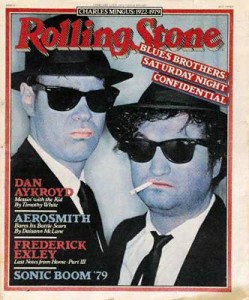
1979 Rolling Stone cover Blues Brothers SNL Dan Ackroyd John BelushiIn 1980, when I accepted a job with a then bankrupt nonprofit organization in Somerset, PA, what had been a booming coal industry went into the skids. My house mortgage was about the same as the unemployment rate, 19%.  The job that I took was in the arts and Ronald Reagan was interested in cutting funding to the National Endowment for the Arts.

In 1985, my new job was with a tourism agency, and that was the year that then-PA Governor Casey cut funding to tourism.

In 1988, when I entered healthcare, it was clear that Johnstown could no longer support four hospitals, and the next decade and a half resulted in the closing of two (and almost three) of the four hospitals in that area.

Turn the clock forward to last October, when I announced my decision to become a healthcare consultant.  The stock market crashed, eight of every ten hospitals stopped, postponed, or scaled back needed capital projects, 58% of hospitals are now reporting  increases in uninsured patients using the emergency departments, 48% of hospitals have cut staff, and 80% have reported cutting expenses that include consultants.

As a consultant, the first thing I would tell anyone is that “No matter how bad things appear to be, you can do it.”

  • Our successes as a teacher continue to remain evident as former students ranging in age from 38 to 58 continue to remind me of great memories of our time together.
  • The arts organization became the largest and most successful rural arts organization east of the Mississippi.
  • The Convention Bureau went from almost closed to the fifth largest agency in the State, and most of you have tracked the successes that we experienced at Windber.

Not unlike the little engine that could, we focused on the positive, forgot about the negative, and never dealt with “Mr. In-between.”

roosevelt_action400

There are those who approach life cautiously, carefully, and very conservatively, and then there are those of us who drink from that same cup in big gulps and dream about how things could be rather than how they are.  There are those who are afraid of failure, and those of us who embrace failure because we know that it is getting us closer to more dramatic successes.

The only boundaries that we have are between our ears.

Because the future is a design function. Let me close this blog post with the ending from my commencement address to the graduate students of St. Francis University (with the help once again of Dr. Leland Kaiser):

  • Nothing has to be the way it is.
  • We can invent (or prevent) our future, because all limitations are self imposed.
  • We can empower ourselves to create a new world.
  • Reframe any limitations to become opportunities because…
  • Tremendous limitations breed success. They open doors.

So, as we design our future, remember that we should not work to create what people will like, but instead work to create what people will love!

…and we will know success beyond our wildest dreams.

Share

A Proactive Approach to Ecology

February 22nd, 2009

The Greening of America is here.

Despite the fact that the Clinton and Bush administrations determined that we would not be legally bound by the Kyoto Agreement, President Obama has a more proactive view on the nation’s environmental policy.

The following is a short list of Obama administration initiatives that will be funded for greener solutions to clean, efficient, American energy: Smart grid, advanced battery technology, energy efficiency:

  • $30 billion for such initiatives as a new, smart power grid, advanced battery technology, and energy efficiency measures, which will create nearly 500,000 jobs.
  • Help state and local governments make investments in innovative best practices to achieve greater energy efficiency and reduce energy usage.

Tax incentives to spur energy savings and green jobs:

  • Provides $20 billion in tax incentives for renewable energy and energy efficiency over the next 10 years.
  • Provides a tax credit for families that purchase plug-in hybrid vehicles of up to $7,500 to spur the next generation of American cars.
  • Includes clean renewable energy bonds for state and local governments.
  • Establishes a new manufacturing investment tax credit for investment in advanced energy facilities, such as facilities that manufacture components for the production of renewable energy, advanced battery technology, and other innovative next-generation green technologies.

The Kyoto Protocol is an international agreement linked to the United Nations Framework Convention on Climate Change.

The major feature of the Kyoto Protocol is that it sets binding targets for 37 industrialized countries and the European community for reducing greenhouse gas (GHG) emissions. The Kyoto Protocol was adopted in Kyoto, Japan, in December 1997 and entered into force in February 2005; 184 parties have ratified its protocol to date.

Although the United States did not ratify the Kyoto Protocol, voluntary efforts were made to reduce GHG emissions here, even as 132 of the nation’s mayors pledged to meet Kyoto-like emission targets in 2005.

In 2003, some U.S. companies and cities agreed to participate in a legally binding voluntary carbon market – the Carbon Credit Exchange.

The CCX, like other cap-and-trade programs, set limits or caps on allowable emissions.

The CCX issued allowances for trading among the members that correspond to the emission cap. CCX members have agreed to reduce their emissions by 6 percent below their baseline for 2007 to 2010.

The publically traded CCX is about a $70 billion business that previously was somewhat limited to power producers and large industries.

A recent article in the New York Times indicated that within the next four or five years, this market is expected to grow to $500 billion as the country begins to work toward green and a cleaner environment.

Currently, the European Union has the largest and most famous carbon trading system.

The European Trading Scheme is a cap-and-trade system in which the government sets national emission caps based on its Kyoto and national targets.

Allowances, totaling the caps, are then distributed to individual firms for trading throughout the EU. If emissions are capped, for example, at 200 million tons a year, there are 200 million allowances distributed to firms for offsetting emissions.

These firms can then use the allowances to offset their own emissions, reduce their emissions and sell the allowances to other parties, or bank the allowances for future use.

If a firm does not have adequate allowances to offset its emissions, the firm must purchase allowances or pay a significant financial penalty.

The cost of allowances, if available, is generally less than the financial penalty. The buying and selling of allowances, trading, creates a market, thus the cap-and-trade program designation.

Due to the financial challenges companies face on an ongoing basis, recent studies have shown that Sector 3 organizations will have the most difficulty dealing with this metamorphosis.

Consequently, schools, churches, hospitals, and local government will be struggling to find the means to make the green transitions such as retrofitting lights, more efficient use of demand meters, voluntary curtailment, and the installation of efficient energy supplies utilizing renewable fuels, i.e. biomass combined heat and power systems.

E-CCAP is one possible solution to this nonprofit problem, an initiative that is funded through two prominent Pittsburgh Foundations led by the Pittsburgh Gateways Corp. and its partner in this project, World-Class Industrial Network.

They are working together to capture opportunities in the developing financial markets associated with energy and carbon reduction and general sustainable practices such as switching to renewable resources or investing in energy efficiency methods.

E-CCAP is working on a set of developmental and applied activities designed to define and demonstrate that nonprofit organizations, serving industrial, commercial and institutional based stakeholders, can leverage relationships with its constituents to both promote and financially share in the benefits of sustainable business activities.

In so doing, the nonprofit organization can better meet its core mission by exploiting new revenue streams not previously available.

E-CCAP is targeting a pilot project with industrial, commercial, and institutional based stakeholders, to aggregate the financial benefits of energy efficiency and renewable energy projects through the emerging markets for energy efficiency credits.

These green credits will be aggregated and traded to support the partnership and serve the participating third sector organization and their constituents.

They will specialize in the development of credit generating projects, have those green savings validated by an independent third party, and broker the credits.

(This blog post is also published as a feature article in the 2/21/09 edition of The Tribune-Democrat.)

Share