Archive for the ‘inspiration’ category

IBRF – The International Brain Research Foundation

April 23rd, 2010

Popular Science in their March 2010 Edition published an article entitled “Waking Up the Brain Dead.”  the sub-title read “A Cocktail of Therapies Jump-Starts Patients’ Brains.”  Then, the May 2010 Ladies Home Journal is publishing an article entitled, “World Leaders in Translational Clinical Research for Alzheimer’s Disease,” (The International Brain Research Foundation – IBRF; in November of 2009, The Clinical Neuropsychologist published an article “The New Neuroscience Frontier: Promoting Neuroplasticity and Brain Repair in Traumatic Brain Injury” that was co-authored by at least two members of the IBRF, Dr. Philip DeFina and his associate Dr. Rosemarie Scolaro Moser, regarding the future of treatment for Traumatic Brain Injury (TBI).

Philip De Fina, M.D.With an 84% success rate in waking up patients from deep, irreversible, persistent vegetative state comas traditional neurologists, neurosurgeons, and neuroscientists have called these “wake ups” flukes, but once you have nearly 45 flukes, the question becomes, “Are they real?”  As the Popular Science article states, Dr. DeFina and his team apply already approved medications, electrical stimulation, and nutraceuticals to the patient, but they do it in a virtual cocktail that has had a dramatic impact on these patients.

After having spent several days working with the folks at the International Brain Research Foundation, my personal heart strings began making their own music.  Not unlike the work that we did at my previous employer, DeFina’s Research Foundation is blazing new trails, not necessarily by inventing all new methodologies, but by applying new approaches to  well-established and FDA-approved drugs and protocols.  They are making unbelievable progress with highly nuanced protocols that will potentially change neuroscience forever.

In typical “small science” fashion, the traditional approach to these patients has been to apply one protocol at a time, and when that fails, move on to the next.  Dr. DeFina appropriately points out that this unconventional approach is effective because it goes to the source of numerous highly complex brain centers.  He asked me to imagine the Wright brothers trying to fly an airplane one “part” at a time.  “Orville, do you think this propeller will fly?”  Of course, that concept is absurd, but that is an appropriate description of how  Traumatic Brain Injuries are currently addressed.
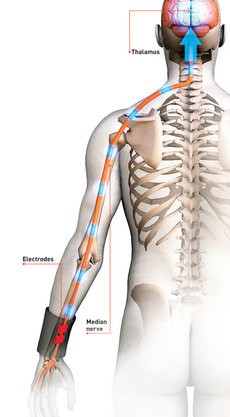
Image from Popular Scince -  Waking the Brain DeadNearly a dozen years ago, when we were beginning our work at the research institute, it was obvious that the reason that cancer had not been cured was because science takes a very laser-like approach to everything;  let’s call it small science.  When we determined that we should have a pristine, highly-annotated collection of specially-collected breast tissue, that we should have a central data repository, and that, heaven forbid, we should have ensemble-type multi-disciplinary teams of scientists and MDs working together, it was as if we had suggested that all science be trashed.  It was so controversial.  To think that one scientist did not keep total  and complete control over all of the data generated by his work.  It was heresy.

Bottom line?  I believe that the International Brain Research Foundation will have us rethinking our living wills not to many years from now as they continue to awaken deep, irreversible coma victims and help them find their lives again.   Not unlike the activities at the Windber Research Institute, where the “Platinum Quality Tissue” is currently being used to map the breast genome.  We are looking into the future of science, and it is very exciting indeed.
IBRF Banner - Dr. Philip De Fina - Nick Jacobs - HealingHospitals.org - Sunstone Consulting

The very difficult news is that the IBRF is totally and completely dependent upon donations and grants for their work, and traditional granting organizations do not favor nontraditional approaches to curing disease and saving lives.   So, after you do your due diligence, if you are as moved as I was, check out the IBRF’s website (including their excellent videos) at www.ibrfinc.org, and help them change history.

For further reading:

Share

Jacobs in Wonderland

April 16th, 2010

Back in 1969, a famous singer by the name of Peggy Lee came out with a song entitled, “Is That All There Is?”  She sang about her lifetime experiences of having her house burn down, having attended and then realizing that she hated the circus, and then being dumped by her boyfriend.  After each one of those experiences she would sing, “If that’s all there is my friends, then let’s keep dancing.  Let’s break out the booze and have a ball.”

This song could only be described as a “downbeat song of disillusionment.”  It probably contributed to the creation of most of the new antidepressant drugs that we have today.  Now that was  a wonderful contribution to society that evolved that even Peggy could never have foreseen.  So, for an optimist, one must dream that “from trials and tribulations good things may happen.”  Or, if you’re the head of a pharmaceutical company, you might say, “from depressing songs we can make billions of dollars.”  (It’s a joke …relax.)

Truthfully, we all spend time each day kicking away the many disappointments that come at us as we work our way through the myriad speed bumps that come up during our own personal journeys.  This week was a week of observation for me.  I spent time observing what is going right and what is going wrong at all levels: personal,  business, national, and international for friends, fellow employees, relatives, other loved ones, companies, and politicians.   During my periods of reflection it became clear to me once again that “change is inevitable.”  In fact, change is life and life is change.   Those who can embrace it, deal with it, and make the best of it seem to thrive.

Leland Kaiser - Healthcare Futurist - Nick Jacobs, FACHE - Healing HospitalsThe challenge for most of us seems to be that of being able to get ourselves into harmony with what we want. Some days we have good thoughts, then not-so-good thoughts, and then the next day good thoughts and so on.  It has become clear to me that we need to reach a permanent state of believing without any doubt in exactly what we want to have happen.  Then, not unlike those 10,000 hours that I practiced my trumpet, it a matter of sticking with it until you get better and better at creating your own destiny, designing your own future.  Because as Leland Kaiser has said over and over again, “The Future is a Design Function.”

Dr. Denis Waitley, a positive mental attitude psychologist for the U.S. Olympic team, often speaks of positive self talk, but more importantly, he speaks of taking positive action. If  you don’t like what is happening, work to change it, but first you need to dig deep down inside yourself and determine if it is because you are truly offended by what is happening or if it is just change itself that you resent or fear.  Positive energy is not a “Jacobs in Wonderland” phenomena.  Rather, it is the movement that brings good things to life.

So, embrace healthcare reform as you try to figure it out.  Embrace nuclear arms reduction.  Embrace the fact that you are stranded in Europe because of a volcanic cloud.  It’s all good, or at least we can make it all good.  As long as we have life, love, and a will to succeed, it’s all good.  And, Peggy, the answer is, “No, that’s not all there is.”

There is nothing more fulfilling than living a purpose driven life, than contributing to the betterment of mankind in some meaningful way.   As I work with the International Brain Research Foundation to help them find support to bring traumatic brain injury (TBI) patients out from what were previously believed to be deep, irreversible comas: as I work with the fine people in breast cancer research to spread their work internationally; as I work in Patient Advocacy, and in finding resources for hospitals and physicians to enable them to provide even more superior care, I can tell you that “That’s not all there is.”   In fact, it’s just the beginning.

Share

There are (at Least) Ten Reindeer

December 13th, 2009

{Taking a business blogging break this week for a little holiday fun.}

This holiday thing is intense. I was reading the other day that people started really getting into celebrating Christmas around 354 A.D. So, we made it from 354 until about 1954 before things really became so commercial. It took 1600 years for capitalism to take hold, but when it did, WOW! I’m not exactly sure what a Christmas recession looks like in other countries, but in the United States, we seem to still buy everything; we just try to get it on sale.

So, in the spirit of holiday capitalism, I went to the mall today with three of the little kids; the six, four, and almost two year old.  We went there to see Santa Claus, or, as their mom called him, “The Big Cheese.” When she called Santa that, there was a three kid pause, and finally, the four year old said, “Cheese?” Who is the “Big Cheese?” “Santa,” her mom said, “Santa Claus is the Big Cheese.” Nina said, “Why is he cheese? I thought he was Santa.” By then mom realized that it was not good to confuse little kids about elves, magical people, and such because it was already confusing enough.

Photo Credit: AP

Photo Credit: AP

The day’s plan was simple: get their picture taken with Santa. We needed Annie Sullivan, Helen Keller’s teacher to pull off that miracle. The oldest one with two missing front teeth, played with everything in the garage before agreeing to be strapped into his seat, and the baby somehow flipped the lining of her seat and buried the belt latches. Only the four year old, who was wearing her Christmas dress, sliver dancing shoes, and holiday hair ribbon climbed into her seat and said, “Let’s go see Santa.” Not unlike her three year old cousin, Lucy, who spent hours under the Christmas tree staring mesmerized up into the lights and decorations, Nina was completely into it all.

When we arrived at Santa’s workshop, we watched a string of tiny kids panicking on the ole boy’s lap. The two year old was no different. Nothing helped. Squeaking reindeer toys, binkies and funny faces, were all in vain as she screamed in the arms of this strange, red suited man. After the trauma, we bought their Christmas picture. It had one terrified baby and two older kids looking off into space as if a hypnotic alien was on top of the camera. It could have been a scene from “Transformers 2: Revenge of the Fallen.”

During lunch we discovered that Santa had known exactly what the middle child wanted for Christmas, and that he had even discussed the particulars with her in detail.  The magic continued. It was also during this meal that  we had a very serious reindeer discussion. The boy’s mother looked at me and said, “Ask your grandson to name the reindeer that pull Santa’s sleigh.” So, I did just that. To which he replied, “Well, Poppa, you see, there’s Dasher and Dancer and Prancer and Vixen, Comet, Cupid, Donner and Blitzen plus Rudolph and Olive.” “Olive?,” I said out loud. “Yes,” he replied strongly, “Olive the other reindeer …used to laugh and call him names.” The absolute truth about the reindeer is that Dunder and Blixem, Dutch words for Thunder and Lightning, had their names changed to Donner and Blitzen several years ago for better song rhyming. (Another list of reindeer names that I saw included: Fireboy, Leroy, Pablo and Clarice, so Olive worked for me.)

In fact, this week I got another E-mail describing a third grader who was reading a story in class when he yelled out, “Mr. Markle, what’s a frickin’ elephant?” The teacher walked quickly over to the student’s desk to assure him that he was incorrect when he saw that the boy was reading a story about an “A-frican elephant.”? He was obviously Hooked on Phonics. So, “Ho, Ho, Ho, Merry Christmas to all and to all a good night.”

Share

Loyalty and The Life of a CEO

August 9th, 2009

Since stepping back from my CEO role, I have had time to reflect upon the toll that a position like that can take on any individual regardless of the thickness of their epidermis. I have come to realize that anyone who is completely in charge of an organization faces many of the same challenges.

CEO_scales256As a young man, I had serious delusions about what it would be like to be in the role of President. It was kind of a Superman fantasy: Yes, I would be kind, understanding, and fair. It would be my further commitment to be honest, forthright, and ethical in every way. My obligation would be to the people and the patients at all levels. My motto would be “Truth, justice, and the American way.”

Then the big day came, and my tenure began. It took about an hour to realize that it was now my personal responsibility to do everything necessary to generate all of the money needed to make payroll for the employees. In an area with a disappearing population base, that was an extremely challenging task, and as the Sisters of Mercy used to say, “No money; no mission.”

During the money quest, the issues of loyalty and fairness were always rearing their ugly heads. Could you, in this very self-centered culture, ever really expect people to be loyal no matter what your commitment had been to them? I would minimally try to play the role of a benevolent, servant-leader.

I was the guy who would reach out to people who needed a break and then provide them with that break; sometimes against the conventional wisdom. What did I expect in return from them?  Simple loyalty. Time and time again, however, those same people who might never have had the opportunity that they were given would turn on me. It became almost predictable.

It took them a long time to believe that they were capable of doing the job that I had personally selected them to take, but usually as soon as they reached their comfort zone they would begin to turn away. Maybe it is just human nature, but even Mighty Mouse would have been disillusioned by this recurring situation.

The other CEO reality is that fairness is situational and so subject to interpretation that it becomes impossible to please or satisfy everyone. The nature of our new collective employee psyches seems to be one of “If it’s not done directly for me, then it’s not fair.” The list of individuals who were brought to the leadership stage over my 22 years in healthcare was voluminous. Dozens of people were given consideration for their education, salaries, promotions, and advancements, yet if one other person was recognized in a similar way, the hue and cry was often, “It’s not fair.”

superman_couch

So, looking back over two decades of running hospitals, foundations, a research institute, and several other spin-off companies, an appropriate summary for any future leader is to “go with your gut.” With that in mind:

You are not now and will never be a superhero.

You are a human being with human frailties.

You cannot right the world or repair dysfunctional childhoods, marriages, or lifestyles through your benevolence.

However:

You can do what you believe will result in the most good for the most people.

You can respect the fact that your efforts could help to continue payrolls for hundreds or even thousands of families.

You can embrace the fact that the vast majority of your mistakes will not be fatal to anyone, but you also need to learn to cut your losses and deal with the disloyal.

One of my mentors used to pull me aside periodically and say, “Nick, you’re doing a great job, but you need to lighten up. We only pass through here once. So, try to enjoy yourself, my friend.”

Now that was good advice.

Share